By • Published on May 26, 2026 • 5 min read • 4,806 views
This article is educational and is not a diagnosis or treatment plan. Work with a qualified clinician or dietitian for new, severe, progressive, or disruptive symptoms, dehydration, bleeding, weight loss, fever, nighttime symptoms, eating restriction, or low-FODMAP guidance.
Low FODMAP is already a structured diet. Night shift adds a second structure on top of it: sleep at odd times, meals during breaks, caffeine when you are tired, shared fridges, limited bathrooms, and flare days when the schedule does not pause.
A low-FODMAP diet can reduce IBS symptoms for some people when used as a structured strategy 1. But it is not meant to become a permanent list of only safe foods. Monash frames the diet as restriction, reintroduction, and personalization 2.
For night shifts, the job is not to make the diet stricter. It is to make the sequence more predictable.
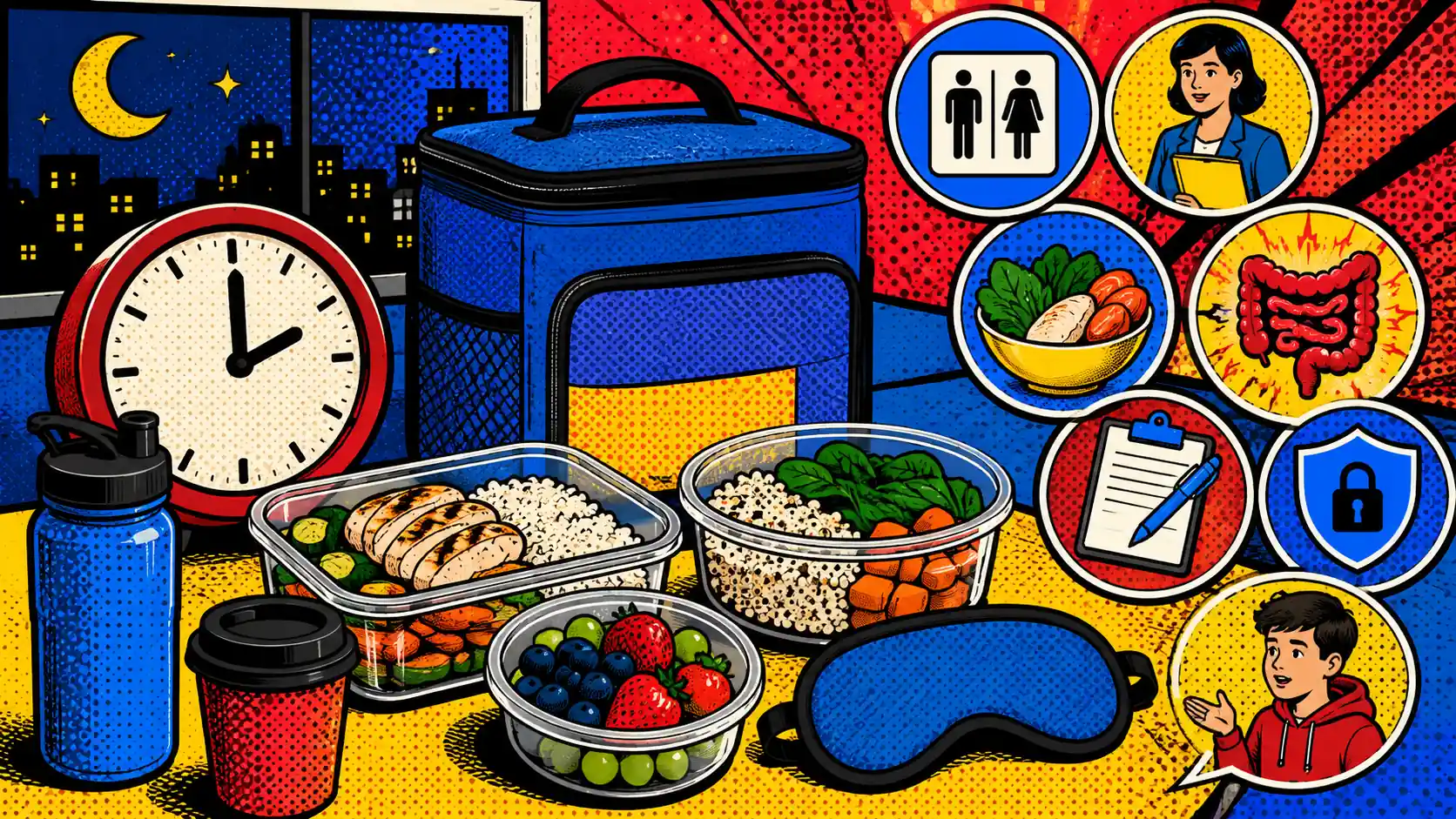
Shift work can disturb sleep and circadian rhythms, and GI symptoms can cluster with those changes 3. NICE IBS guidance includes regular meals and taking time to eat as part of first-line lifestyle and diet advice 4.
For night workers, "regular" may not mean breakfast at 7 a.m. It may mean the same sequence across similar shifts:
If symptoms change every shift, test the rhythm before removing more foods.
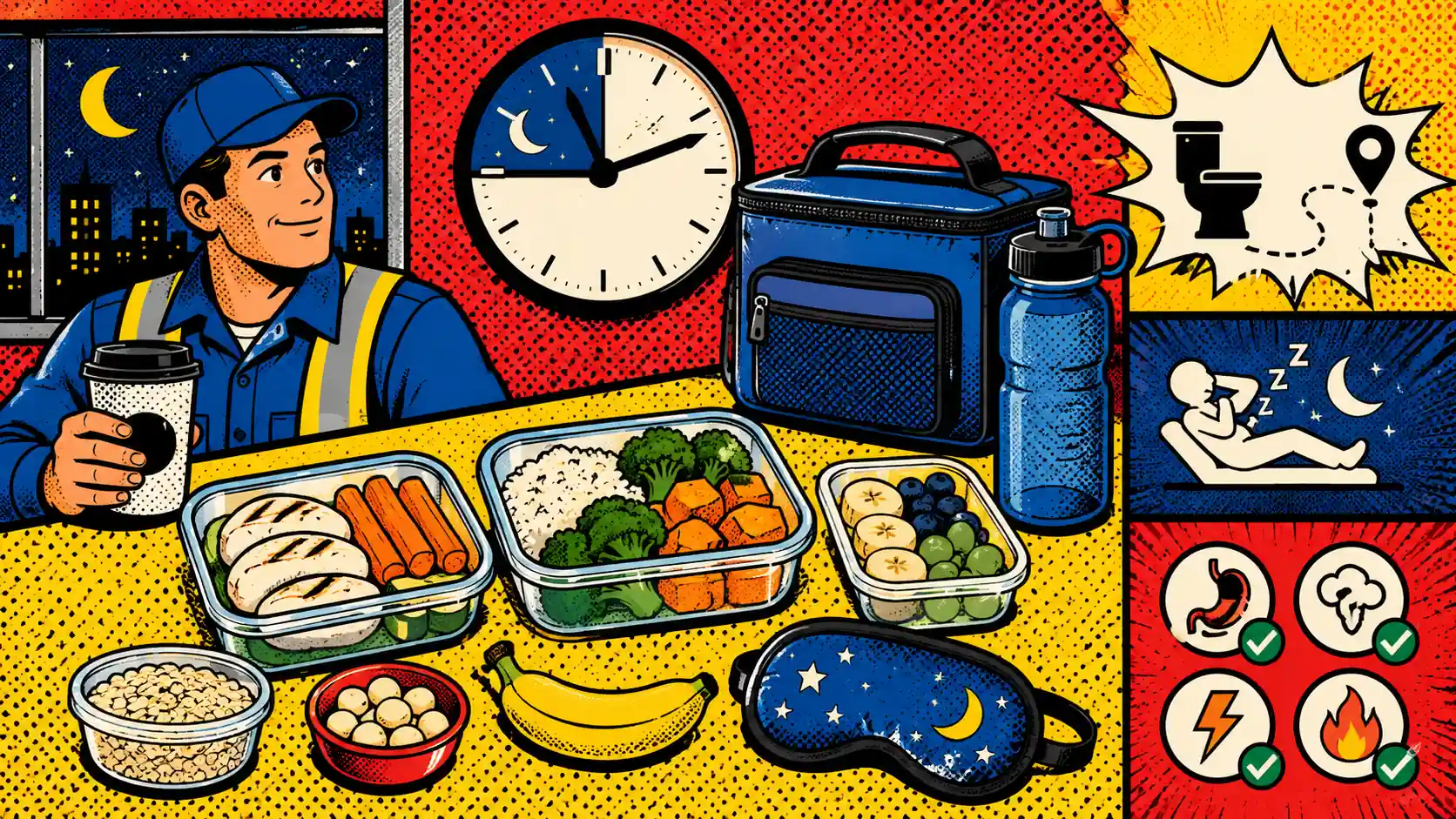
Use low-FODMAP foods you already tolerate. Do not make a night shift the first test of a new food, new fiber dose, new supplement, and new caffeine pattern.
| Shift moment | Practical goal | Example direction |
|---|---|---|
| Before shift | Start fueled, not stuffed | rice bowl, potatoes and eggs, oats, or a familiar meal |
| Mid-shift | Avoid grazing under stress | packed snack or small meal |
| Hydration checkpoint | Reduce headache, constipation, and diarrhea risk | water bottle plus ORS plan if diarrhea risk is high |
| Caffeine cutoff | Protect post-shift sleep | choose a cutoff before the final stretch |
| After shift | Bridge into sleep | lighter familiar food if large meals worsen reflux or bloating |
For the broader rhythm plan, use shift work, sleep, meal timing, and gut symptoms. For batch prep, use low-FODMAP meal prep. If space is the real barrier, use small apartment low-FODMAP meal prep.
Keep the base simple:
The exact foods depend on your tolerance and the stage of the low-FODMAP process. If you are still in restriction, keep the base stable. If you are in reintroduction, do not test a new FODMAP on the hardest shift of the week.
Download: Night Shift Low-FODMAP Meal and Flare Card to plan meal anchors, hydration, caffeine cutoff, and flare-day simplification.
On a flare day, the goal changes. You are not trying to optimize nutrition, prove a theory, or test a new food. You are trying to get through the shift without making symptoms worse.
Try:
If diarrhea is the main flare pattern, pair this with oral rehydration for diarrhea and IBS flares. If the whole day is unstable, use the IBS flare plan.
Reintroduction works best when the background is quiet enough to read the signal. Rotating shifts make that harder because sleep, caffeine, meal timing, stress, and workload may all change at once.
Choose a reintroduction window when:
Then return to low-FODMAP reintroduction to test one FODMAP group at a time.
| Situation | Next read |
|---|---|
| You need the broader rhythm plan first | Shift work, sleep, meal timing, and gut symptoms |
| You need batch prep for work meals | Low-FODMAP meal prep |
| Limited storage or equipment is the real issue | Small apartment low-FODMAP meal prep |
| Symptoms flare today | IBS flare plan |
| Diarrhea raises dehydration risk | Oral rehydration for diarrhea and IBS flares |
| You are ready to personalize | Low-FODMAP reintroduction guide |
Night shift low-FODMAP planning is not about a perfect menu. It is about a repeatable sequence.
Pick a pre-shift meal, mid-shift option, hydration checkpoint, caffeine cutoff, and post-shift sleep bridge. Keep flare days simpler than normal days. Save reintroduction tests for the most stable shift window you can find. The goal is not to restrict forever; it is to make the night-shift pattern readable enough to personalize.

Xam Riche is a gut health solopreneur and founder of YourFitNature, dedicated to helping people navigate digestive wellness through evidence-based information and personal experience. After years of struggling with IBS and bloating, Xam discovered the transformative power of the low FODMAP diet and now shares practical, science-backed guidance to help others find relief. While not a medical professional, Xam combines extensive research with lived experience to create accessible, empowering resources for the gut health community. Learn more about our mission
As an affiliate, we may earn from qualifying purchases.