 By • Published on May 15, 2026 • 9 min read • 1,471 views
This article is for informational and educational purposes only and does not constitute medical advice. Always consult with a qualified healthcare professional for diagnosis and treatment decisions, especially for severe, new, progressive, bloody, dehydrating, or unexplained symptoms.
If your gut behaves differently on nights, rotating shifts, early starts, or long work blocks, it is easy to blame the last food you ate. Sometimes that is the right clue. But with shift work and gut symptoms, food is rarely the only variable moving.
Sleep changes. Meal timing changes. Caffeine moves earlier, later, or both. Bathroom access may depend on a handoff, patient load, class schedule, commute, production line, or manager. Stress rises because symptoms are harder to control in public. By the time bloating, urgency, constipation, reflux, or abdominal pain shows up, the pattern can feel impossible to read.
This guide is not here to pretend shift work is simple. It is here to give you a cleaner experiment: stabilize the rhythm before shrinking the food list again.
IBS is defined by repeated abdominal pain with bowel-movement changes, such as diarrhea, constipation, or both, without visible digestive-tract damage on routine evaluation 1. That means symptom patterns matter. A change in sleep, meals, caffeine, hydration, stress, or bowel access can change how readable the pattern feels.
Shift work adds a timing problem. CDC/NIOSH describes shift work as work outside the usual daytime window and notes that these schedules can disturb sleep and circadian rhythms 2. In a national worker sample, NIOSH reported that sleep problems were common, with night-shift workers having especially high rates of short sleep duration 3.
The gut is part of that timing system. CDC/NIOSH training for nurses notes that shift workers more often report GI symptoms, including abdominal pain, gas, diarrhea, constipation, nausea, appetite change, indigestion, and heartburn, and it links this partly to sleep and body-clock disruption 4.
That does not mean shift work is the only cause of symptoms. It means the schedule can make the same meal, coffee, fiber dose, or commute feel different.
Before changing foods, name the schedule problem. The plan is different for each pattern.
| Schedule pattern | Main gut challenge | First experiment |
|---|---|---|
| Permanent nights | Eating and sleeping against the usual day-night rhythm | Keep a repeatable wake meal and a lighter pre-sleep meal |
| Rotating shifts | No single clock time stays stable | Anchor the sequence instead of the hour |
| Early starts | Coffee-only mornings, rushed bowels, skipped breakfast | Pack a small first meal and test caffeine timing |
| Split shifts or on-call work | Interrupted meals and interrupted rest | Plan one portable meal and one protected sleep block |
| Long shifts | Delayed meals, dehydration, and bathroom suppression | Build a scheduled food-fluid-bathroom checkpoint |
If the pattern changes every week, do not start with a complicated elimination diet. Start with the simplest timing variable you can repeat for three or four workdays.
NICE IBS guidance includes regular meals and taking time to eat as part of first-line dietary and lifestyle advice 5. For shift workers, “regular” may not mean breakfast at 7 a.m. It may mean a stable sequence:
That sequence matters because it gives your gut a repeatable signal. If the same food feels fine on one shift and chaotic on another, timing may be part of the explanation.
A useful first experiment is not “eat perfectly.” It is “make one part predictable.” Choose one anchor for the next few shifts:
If symptoms calm down, you have learned that rhythm matters. If they do not, you can move to food composition, FODMAP dose, constipation, reflux, or clinician-guided care with a cleaner baseline.
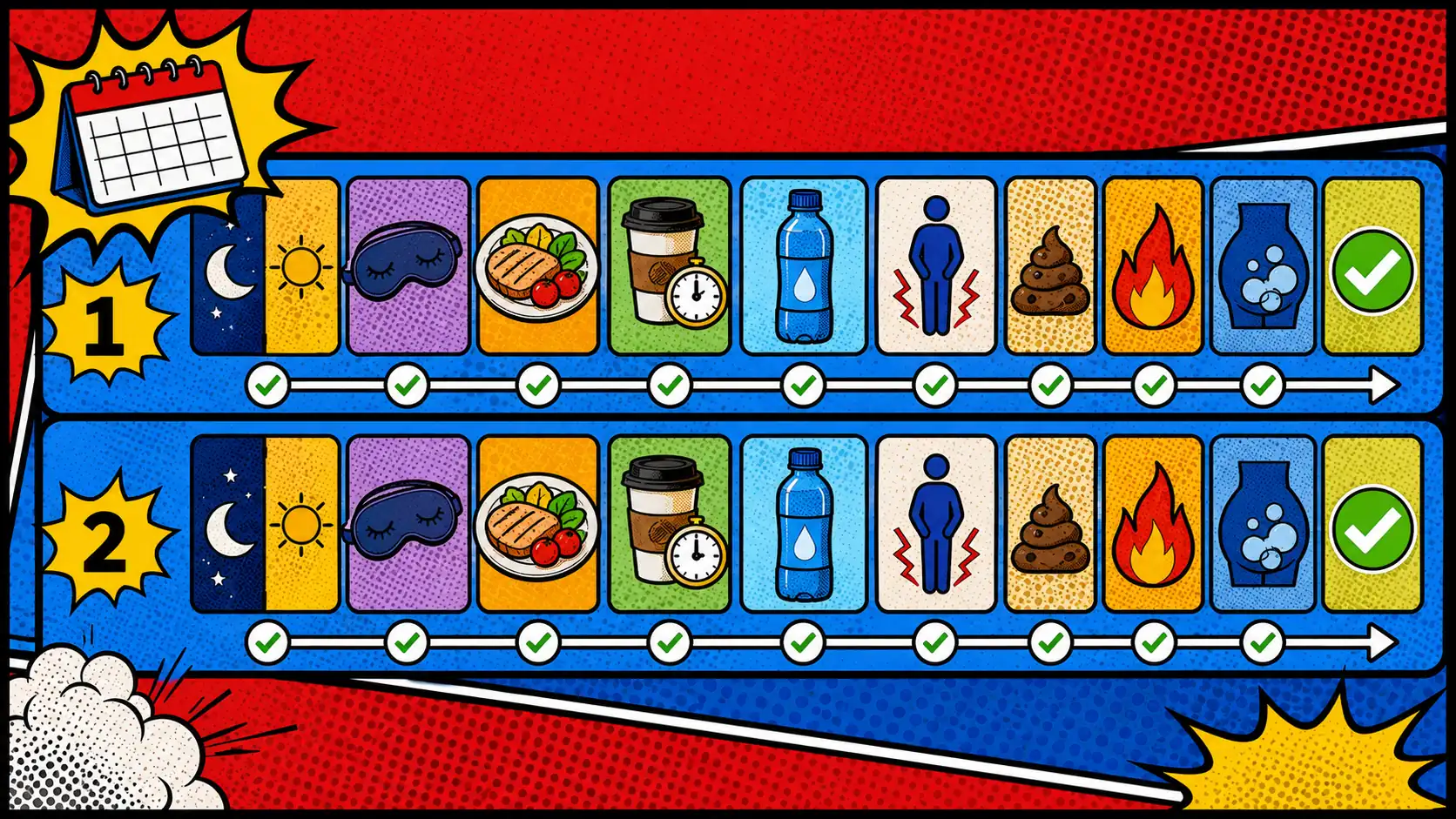
Try a modest meal before the shift instead of starting hungry and relying only on coffee. During the shift, choose a planned smaller meal or snack rather than grazing whenever stress spikes. Near the end of the shift, avoid making the largest, richest meal the bridge into sleep if reflux, nausea, or bloating is a pattern.
Hydration still matters, especially if diarrhea, sweating, or dry indoor work drains you. If this is the main issue, route into hydration, electrolytes, and gut symptoms rather than assuming every symptom is food intolerance.
Rotating schedules are harder because your body does not get one consistent clock. Instead of chasing perfect clock times, keep the order stable: wake, first meal, caffeine, main meal, lighter pre-sleep food, sleep.
This is where the broader meal timing and gut symptoms guide helps. Use that page when skipped meals, grazing, late meals, or compressed eating windows are the main pattern.
Early shifts often create a coffee-only start. If coffee or energy drinks lead straight to urgency, do not test five breakfast foods at once. First test dose and timing. The coffee, tea, and gut symptoms guide can help separate caffeine, acidity, add-ins, and timing.
If the fear is not only symptoms but access, pair this rhythm plan with IBS at work, school, and commuting. A bathroom map, commute buffer, backup supplies, and manager or school plan can reduce panic while you test the actual trigger pattern.
A tracker works best when it is boring. Do not track twenty variables if that makes you quit. Track the few that actually move on shift days:
📥 Free Download: Shift-Work Gut Rhythm Tracker — use it for two weeks before changing multiple foods at once.
The point is not to prove that shift work is the cause. The point is to stop guessing. If symptoms reliably follow short sleep, the next read is sleep and gut symptoms in IBS. If urgency follows specific meals, use urgency after meals. If today is already unstable, use the IBS flare plan instead of running a long experiment.
Do not let an irregular schedule explain away symptoms that need care. Get medical help promptly for blood in stool, fever, unintentional weight loss, anemia, severe dehydration, severe or worsening pain, persistent waking from symptoms, new symptoms after age 50, or symptoms that clearly break your normal pattern.
Also consider clinician or dietitian help if you are cutting more and more foods to survive shifts, losing weight unintentionally, skipping meals out of fear, or struggling to eat enough. A work schedule can be hard on the gut, but the solution should not be a smaller and smaller life.
| If the main situation is... | Use this page |
|---|---|
| "I am pregnant or postpartum and symptoms changed." | Pregnancy, postpartum, and IBS symptoms |
| "A teen needs bathroom access or school support." | IBS in teens school bathroom plan |
| "Symptoms changed around menopause or perimenopause." | Menopause, perimenopause, and IBS symptoms |
| "Symptoms follow my menstrual cycle." | Menstrual cycle and IBS symptoms |
| "Pelvic pain, sex pain, or possible endometriosis is part of the pattern." | IBS, endometriosis, or pelvic pain |
| "Work, school, commuting, or bathroom access is the barrier." | IBS at work, school, and commuting |
| "Shift work, sleep timing, or rotating meals changed the pattern." | This page |
Download: IBS Life Context Route Card for the situation-first chooser across pregnancy/postpartum, school, midlife, cycle timing, pelvic pain, public-day logistics, and shift-work rhythm.
| Situation | Best next read |
|---|---|
| Poor or irregular sleep is the main signal | Sleep and gut symptoms in IBS |
| Skipped meals, grazing, late meals, or compressed eating windows dominate | Meal timing and gut symptoms |
| You need low-FODMAP meals to fit night shifts or rotating schedules | Night shift low-FODMAP meals and flares |
| Caffeine timing drives urgency, reflux, or jitters | Coffee, tea, and gut symptoms |
| Diarrhea, sweat, constipation, or low intake changes the work block | Hydration, electrolytes, and gut symptoms |
| Sudden urgency after meals is the public risk | Urgency after meals |
| Symptoms have to be managed at work, school, or during commuting | IBS at work, school, and commuting |
| Night sweats, midlife sleep disruption, or hormone-transition context is part of the pattern | Menopause, perimenopause, and IBS symptoms |
| Today is already an active flare | IBS flare plan |
Shift work can make gut symptoms harder to read because several variables move at the same time: sleep, meals, caffeine, hydration, stress, bathroom access, and recovery time.
The practical move is rhythm first, restriction second. Pick one anchor, repeat it for a few shifts, and track the result. If the pattern becomes clearer, use that signal. If symptoms stay severe, new, progressive, bloody, dehydrating, or outside your baseline, stop treating it as a normal schedule problem and get medical care.
Xam Riche is a gut health solopreneur and founder of YourFitNature, dedicated to helping people navigate digestive wellness through evidence-based information and personal experience. After years of struggling with IBS and bloating, Xam discovered the transformative power of the low FODMAP diet and now shares practical, science-backed guidance to help others find relief. While not a medical professional, Xam combines extensive research with lived experience to create accessible, empowering resources for the gut health community. Learn more about our mission
As an affiliate, we may earn from qualifying purchases.