 By • Published on May 14, 2026 • 9 min read • 4,259 views
This article is for informational and educational purposes only and does not constitute medical advice, diagnosis, gynecologic care, pelvic-health care, or individualized nutrition counseling. Seek qualified medical care for severe, new, progressive, one-sided, pregnancy-related, bloody, feverish, dehydrating, or otherwise concerning symptoms.
My IBS symptoms change across my cycle.
That question is easy to turn into a food-only project, but this page is built as a route map. It helps you compare the pattern, identify the variable that deserves the first test, and notice when the safer next step is medical review instead of another restriction.
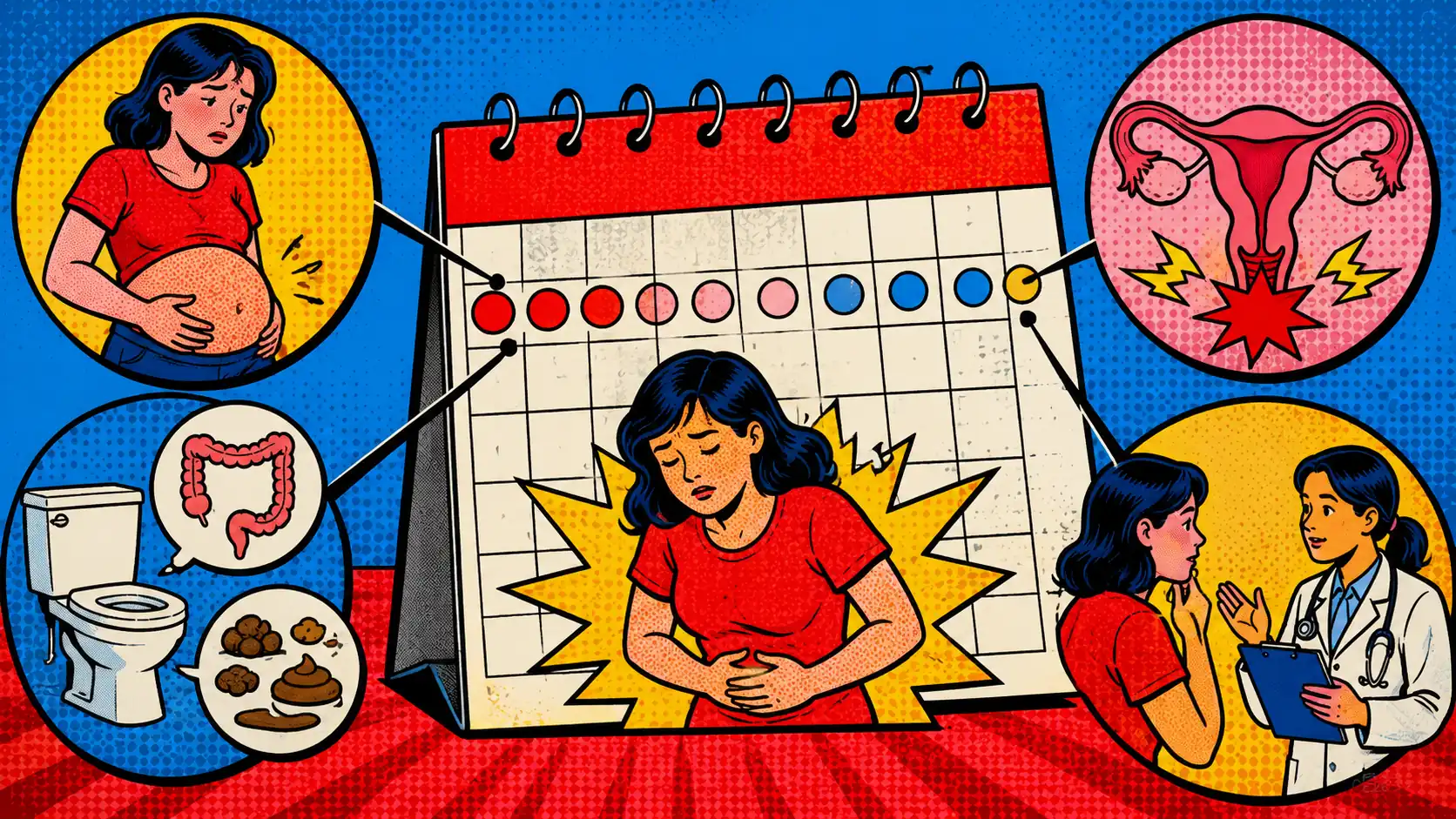
Many people notice bowel changes around bleeding, ovulation, or the days before a period. That does not mean every cycle-linked flare is only IBS. The useful move is to separate familiar timing changes from pelvic pain patterns that need a broader evaluation. ACOG describes chronic pelvic pain as pain lasting six months or longer that can overlap with bowel, bladder, sexual, and menstrual symptoms 1.
For two cycles, track cycle day, bleeding, pelvic pain, stool form, bloating, diarrhea, constipation, urgency, pain with sex, urinary symptoms, and medication changes. If symptoms cluster predictably around the period and settle afterward, the next step may be cycle-aware planning.
Use this as a pattern map, not a diagnosis. Cycle timing can explain why an IBS flare feels more predictable, but it should not erase pelvic, urinary, pregnancy-related, or inflammatory clues.
| Cycle timing | Gut pattern to look for | Wider clues to track | Safer next step |
|---|---|---|---|
| Days before bleeding | Bloating, constipation, food sensitivity, stronger pain response | Breast tenderness, sleep disruption, mood change, migraine, fluid retention | Keep the food experiment steady and track whether symptoms ease after bleeding starts. |
| First 1-2 bleeding days | Looser stool, urgency, cramps, nausea, pelvic heaviness | Pain that stops normal activity, abnormal bleeding, faintness, fever, or severe one-sided pain | Use medical review when pain is severe, new, progressive, or outside your familiar baseline. |
| Mid-cycle or ovulation window | One-sided twinge, bloating, bowel sensitivity, mild stool change | Sharp one-sided pelvic pain, abnormal bleeding, pregnancy possibility, or pain that escalates | Do not treat severe or worsening one-sided pain as an IBS trigger test. |
| Late cycle into period every month | Repeat constipation-to-diarrhea shift, pain amplification, more urgency | Pain with sex, painful bowel movements, urinary pain, or pelvic pain outside bleeding days | Bring the pattern to a clinician instead of only tightening diet rules. |
| No clear cycle pattern | Symptoms follow meals, stress, sleep, travel, infection, or medication changes more than cycle days | Red flags, dehydration, blood, fever, or persistent bowel-pattern change | Route by the dominant bowel or pain pattern rather than assuming hormones are the driver. |
Once the timing is visible, sort the flare by the dominant problem. This keeps a cycle-aware page from becoming a vague "hormones explain everything" answer.
| Dominant symptom | What it may mean for routing | First useful comparison |
|---|---|---|
| Constipation and bloating | The late-cycle pattern may be slowing stool movement or increasing pressure sensitivity. | Compare with constipation and bloating connection if stool backup is the recurring driver. |
| Diarrhea or urgency | The period window may be making bowel speed or cramping more noticeable. | Compare with IBS treatment options if diarrhea, urgency, or medication questions dominate. |
| Pain amplification | The same bowel event may feel louder around stress, sleep loss, bleeding, sex-related pain, or pelvic sensitivity. | Use visceral hypersensitivity in IBS when the pain-volume dial is the main pattern. |
| One-sided lower pain | Location may matter more than food timing, especially with fever, urinary clues, abnormal bleeding, or pregnancy possibility. | Use lower-left abdominal pain for a location-aware safety sort. |
NICHD lists endometriosis symptoms that can include painful periods, chronic lower back or pelvic pain, pain during or after sex, intestinal pain, painful bowel movements, and digestive symptoms 2. If pregnancy is possible, one-sided pelvic or abdominal pain with bleeding, faintness, shoulder pain, or severe pain needs urgent evaluation 3.
ACOG also describes chronic pelvic pain as a pattern that can involve endometriosis, adenomyosis, pelvic floor muscle pain, bladder pain, bowel conditions, and pain with sex 4. That matters because gut symptoms can sit beside pelvic conditions. The goal is not to self-diagnose endometriosis, adenomyosis, or pelvic floor dysfunction from bloating. The goal is to notice when the pattern is too pelvic, too progressive, or too sex-related to keep treating it as a food-only IBS flare.
Bring the wider pattern to care when:
| If this is the pattern | Start here | Why |
|---|---|---|
| Pelvic pain, sex-related pain, or chronic pain overlaps with gut symptoms | Stress, sex-related, and chronic visceral pain | Use this when the route needs nervous-system, sex-related, pelvic, and pain-context language without reducing the symptoms to stress. |
| The same stool or gas pattern feels much more painful around cycle timing | Visceral hypersensitivity in IBS | Use this when pain sensitivity is the main recurring pattern. |
| One-sided lower pain, urinary clues, abnormal bleeding, fever, or pregnancy possibility is part of the story | Lower-left abdominal pain | Use this when location and safety clues matter more than a food-trigger test. |
| Symptoms are shifting later in midlife and the old cycle map no longer explains them cleanly | Menopause, perimenopause, and IBS symptoms | Use this when bowel changes need a wider lens than hormones alone. |
| Symptoms are bowel-pattern dominant after safety concerns are absent | IBS treatment options | Use this when cycle timing is one part of a broader management plan. |
| Symptoms are severe, new, bloody, feverish, dehydrating, or rapidly worsening | Medical review | Safety comes before trigger experiments. |
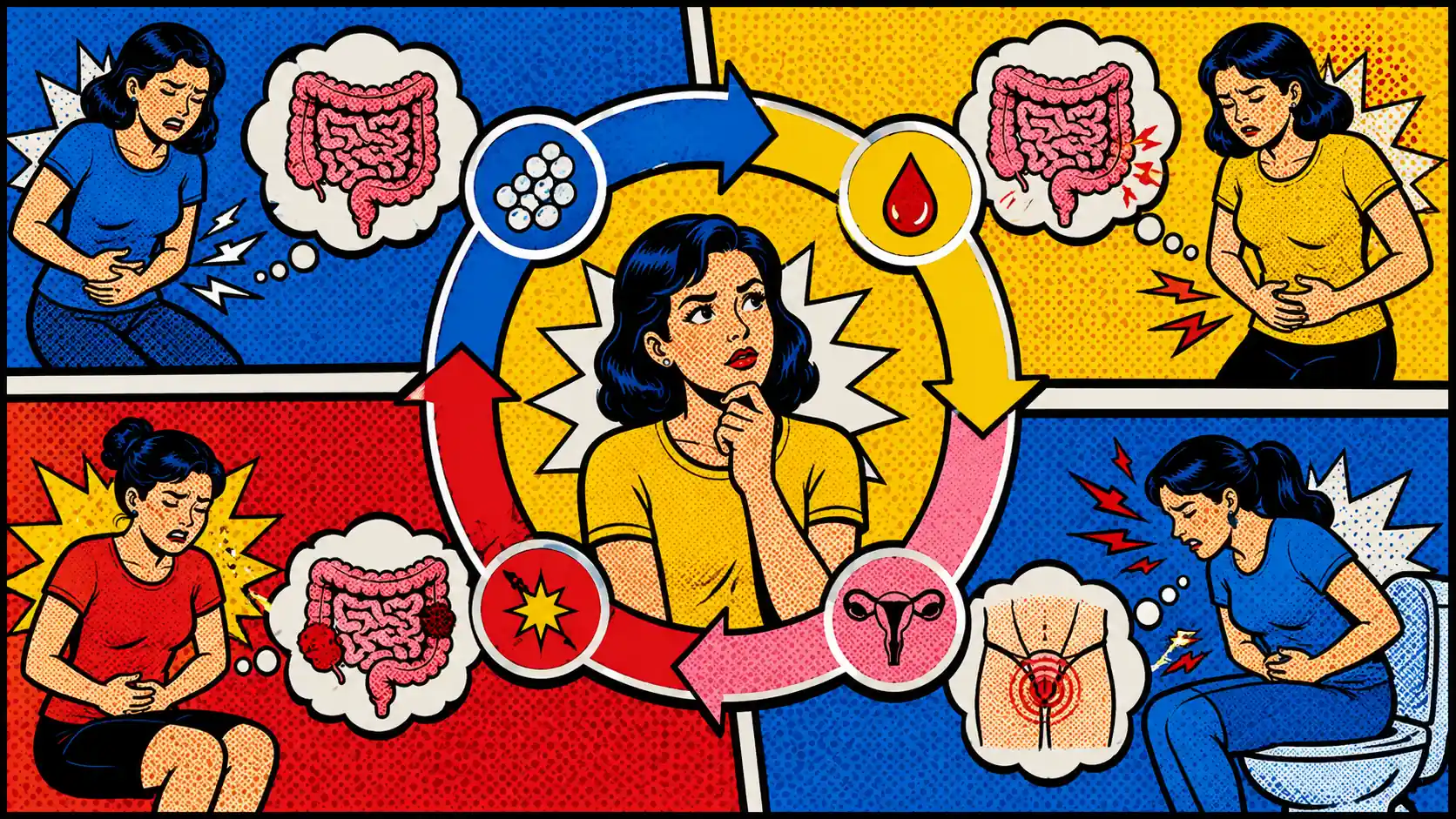
Download: Cycle and Gut Symptom Tracker
Use the sheet for a short experiment window. Write down the symptom, timing, context, and what changed. The pattern should help you choose the next route without adding more noise.
If you book a visit, bring a clean timeline instead of a long theory. The most useful notes are the ones that help a clinician see whether the pattern is bowel-led, cycle-led, pelvic-led, or safety-led.
Track:
For the appointment, the key question is not "which food caused this?" It is: "Does this pattern still fit routine IBS care, or should we also evaluate gynecologic, pelvic floor, urinary, inflammatory, or pregnancy-related causes?"
| If the main situation is... | Use this page |
|---|---|
| "I am pregnant or postpartum and symptoms changed." | Pregnancy, postpartum, and IBS symptoms |
| "A teen needs bathroom access or school support." | IBS in teens school bathroom plan |
| "Symptoms changed around menopause or perimenopause." | Menopause, perimenopause, and IBS symptoms |
| "Symptoms follow my menstrual cycle." | This page |
| "Pelvic pain, sex pain, or possible endometriosis is part of the pattern." | IBS, endometriosis, or pelvic pain |
| "Work, school, commuting, or bathroom access is the barrier." | IBS at work, school, and commuting |
| "Shift work, sleep timing, or rotating meals changed the pattern." | Shift work, sleep, meal timing, and gut symptoms |
Download: IBS Life Context Route Card for the situation-first chooser across pregnancy/postpartum, school, midlife, cycle timing, pelvic pain, public-day logistics, and shift-work rhythm.
| Situation | Best next read |
|---|---|
| Symptoms are no longer just cycle-timed and pregnancy or postpartum context is possible | Pregnancy, postpartum, and IBS symptoms |
| Use this when pelvic pain, sex-related pain, or chronic pain overlap with gut symptoms | Stress, sex-related, and chronic visceral pain |
| Use this when pain sensitivity is the main recurring pattern | Visceral hypersensitivity in IBS |
| Cycle-timed symptoms also travel with migraine, nausea, or pain sensitivity | Migraine and IBS overlap |
| Cycle-timed bowel symptoms come with pelvic pain, painful sex, urinary symptoms, or progressive pain | IBS, endometriosis, or pelvic pain |
| Use this when one-sided lower pain needs a safety-first sort | Lower-left abdominal pain |
| The old cycle pattern is giving way to a wider midlife transition question | Menopause, perimenopause, and IBS symptoms |
| Use this when cycle timing is one part of a broader management plan | IBS treatment options |
Cycle-aware gut-brain and pelvic-safety bridge. The useful move is to sort the pattern before adding more rules. Track the variables that actually changed, use the printable sheet if the pattern is noisy, and escalate symptoms that are severe, new, progressive, bloody, dehydrating, or outside your familiar baseline.
Xam Riche is a gut health solopreneur and founder of YourFitNature, dedicated to helping people navigate digestive wellness through evidence-based information and personal experience. After years of struggling with IBS and bloating, Xam discovered the transformative power of the low FODMAP diet and now shares practical, science-backed guidance to help others find relief. While not a medical professional, Xam combines extensive research with lived experience to create accessible, empowering resources for the gut health community. Learn more about our mission
As an affiliate, we may earn from qualifying purchases.