 By • Published on May 5, 2026 • 12 min read • 4,230 views
This article is for informational and educational purposes only and does not constitute medical advice. New, severe, worsening, feverish, bloody, urinary, pelvic, or pregnancy-related abdominal pain should be evaluated by a qualified health professional.
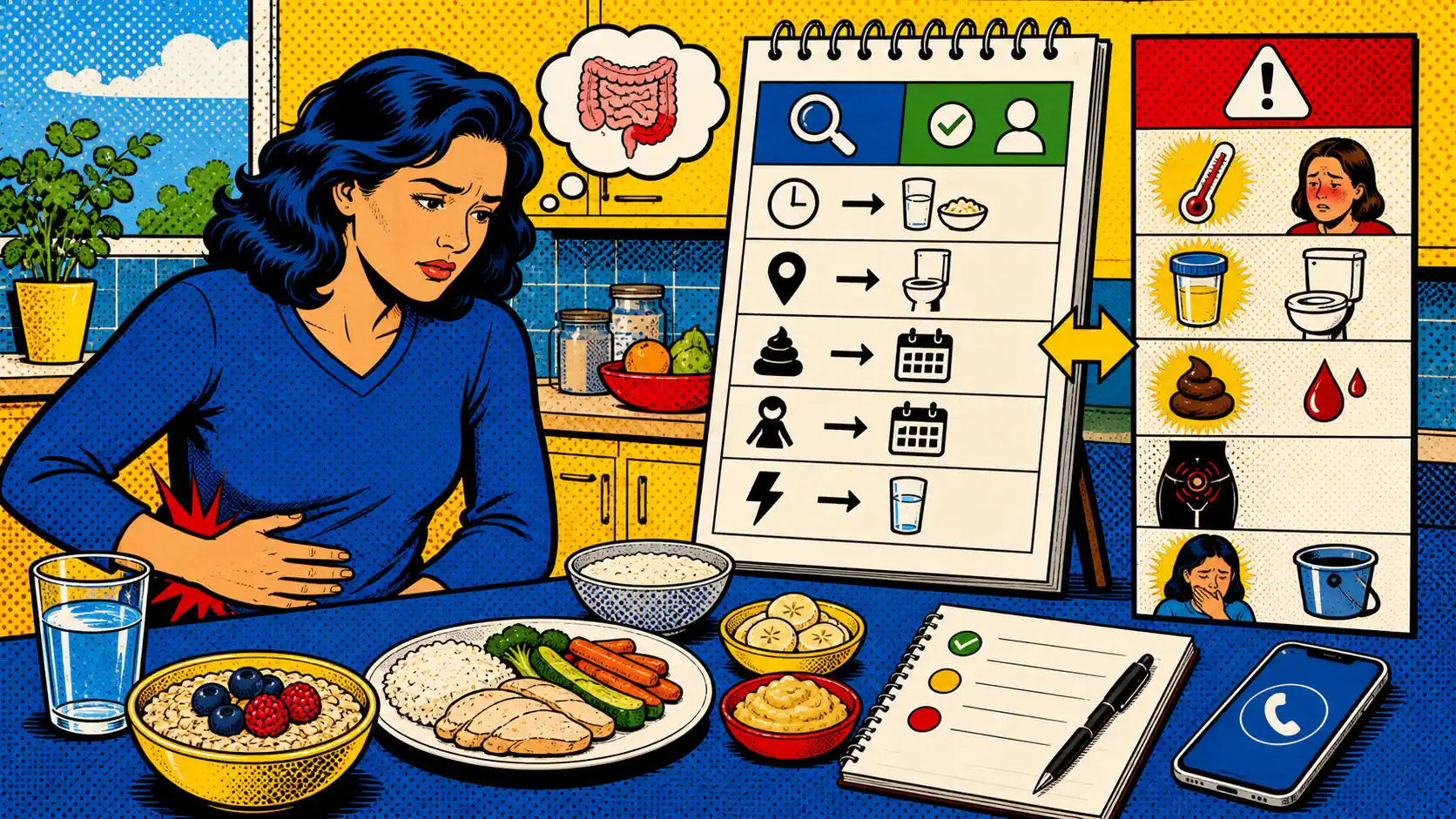
Searching for foods for lower-left abdomen pain makes sense. The pain feels like it is in the gut. You may already know that gas, constipation, and IBS can create sharp, crampy, or stuck-feeling discomfort in the lower belly.
But lower-left abdominal pain is one of those symptoms where the first question is not "what should I eat?" The first question is "does this pattern still look like my usual digestive flare, or has it crossed into something that needs medical evaluation?"
That distinction matters because lower-left pain can overlap with several different stories. It may be an IBS-style flare tied to bowel habit changes. It may be constipation or trapped gas. It may also point toward diverticulitis, urinary symptoms, kidney stones, pelvic causes, or an obstruction-like pattern. Location helps you sort the next step, but it does not diagnose the cause.
Use this page as a safety-first comparator. Food choices come later, and only when the pain is mild, familiar, and not paired with warning signs.
Do not try to solve lower-left abdominal pain with food first if the pain is new, severe, rapidly worsening, or paired with symptoms that raise the stakes.
Mayo Clinic's abdominal pain symptom checker advises emergency medical care for abdominal pain with signs such as black or bloody stool, blood in urine, a swollen tender abdomen, high fever, persistent nausea or vomiting, shortness of breath, dizziness, vomiting blood, or pain in the chest, neck, or shoulder 1. Those are not "wait and see which food helps" patterns.
If pregnancy is possible, one-sided pelvic or abdominal pain deserves an even lower threshold for care. ACOG says abnormal bleeding and pelvic pain should be reported to an obstetrician-gynecologist or other health care professional, and severe abdominal or pelvic pain with vaginal bleeding, fainting or extreme lightheadedness, or shoulder pain needs emergency care 2.
The practical filter is simple:
If any of those are present, skip the food experiment and move toward medical evaluation.
IBS can absolutely include abdominal pain. Johns Hopkins describes IBS as abdominal discomfort associated with altered bowel movements, and notes that people may describe the discomfort as sharp pain, cramping, bloating, distention, fullness, or burning 3.
That means lower-left discomfort can fit an IBS-style pattern when the whole story lines up:
That last point is the key. "I have IBS" is useful context, but it should not become a reason to ignore a changed pain story. If bleeding, unexplained weight loss, anemia, nighttime symptoms, or a different bowel pattern enters the picture, use the stricter IBS versus colorectal warning signs route instead of assuming this is just another flare.
If the issue seems more like food-trigger confusion than one-sided pain, the SIBO vs IBS vs food intolerance comparator may be a better next read.
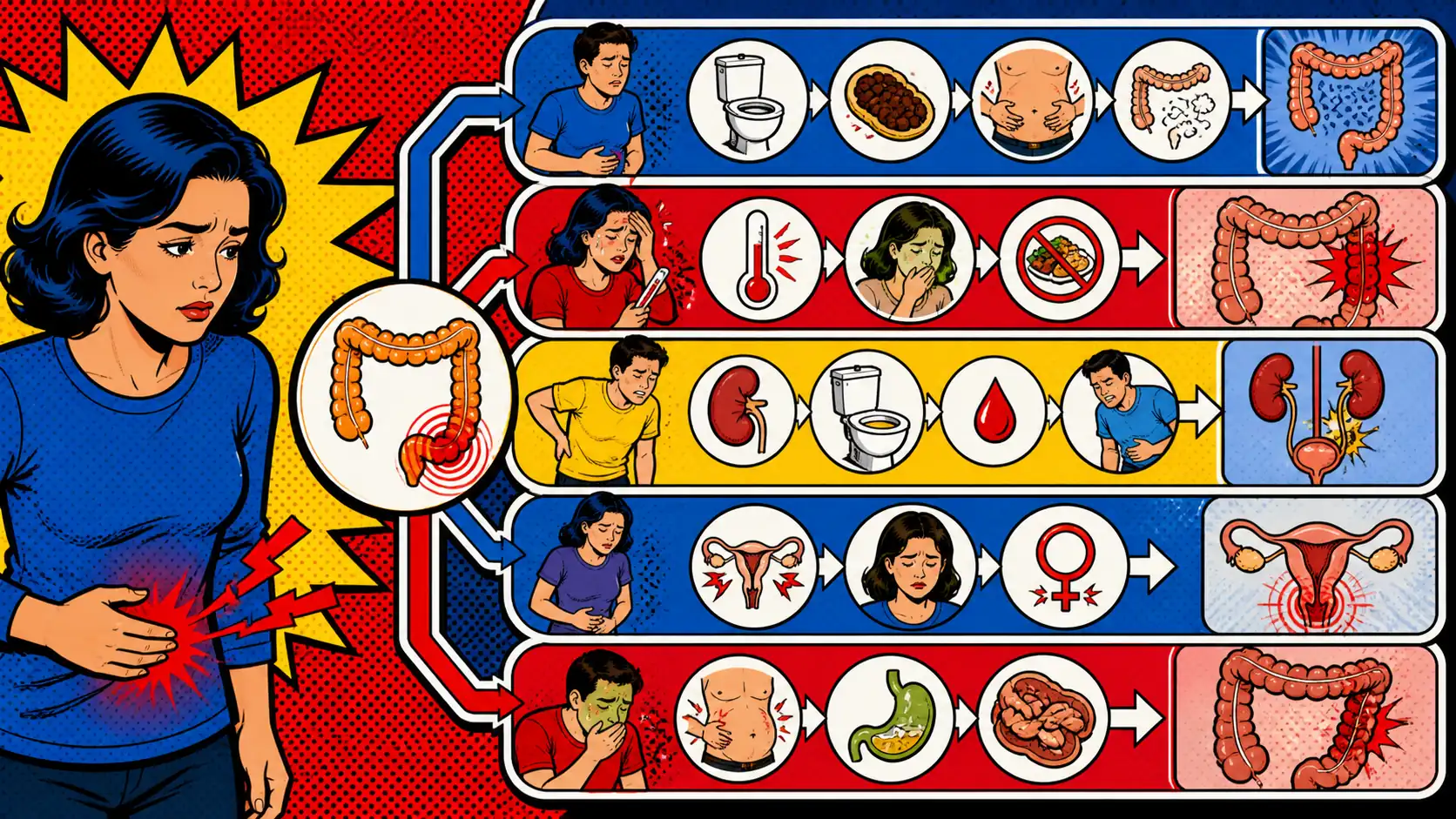
| Pattern | What it may feel like | Clues that push away from simple IBS | Next step |
|---|---|---|---|
| IBS, gas, or constipation | Cramping, pressure, bloating, bowel-change discomfort, sometimes worse after meals | Familiar and recurrent is more reassuring; new severity, fever, bleeding, vomiting, or nighttime symptoms are not | Track the pattern, keep meals gentle, and review if it changes |
| Diverticulitis-like | Lower-left pain that may be severe, sudden, or gradually worsening | Fever, chills, nausea, vomiting, constipation or diarrhea, tenderness, worsening course | Medical evaluation rather than food-first self-care |
| Kidney stone or urinary | Sharp pain in the back, side, lower abdomen, or groin; lower-belly pressure | Blood in urine, burning urination, constant urge to urinate, cloudy or foul-smelling urine, fever, chills | Prompt medical review, especially with fever or blood in urine |
| Gynecologic or pelvic | One-sided pelvic/lower abdominal pain, pain near cycle timing, abnormal bleeding | Sudden severe pelvic pain with nausea/vomiting, pregnancy possibility, faintness, shoulder pain, abnormal bleeding | Urgent care, OB-GYN, or emergency evaluation depending on severity |
| Obstruction-like | Cramping waves or steady severe pain with swelling | Distension, persistent vomiting, inability to pass gas or stool, severe steady pain | Urgent evaluation; see bowel obstruction pattern guidance |
This table is not a diagnostic tool. It is a sorting tool. It helps you decide whether food changes are relevant at all.
Lower-left pain gets special attention because diverticulitis commonly shows up there. NIDDK lists diverticulitis symptoms that may include abdominal pain most often in the lower-left side of the abdomen, constipation or diarrhea, fever and chills, nausea, or vomiting. It also notes that the pain is typically severe and sudden, though it may start mild and worsen over several days 4.
That overlap is why the old question "what foods help lower-left abdomen pain?" needs a safer answer. If the pain is feverish, worsening, tender, or paired with nausea and vomiting, this is not the moment to troubleshoot fiber, FODMAPs, or fermented foods. A clinician may need to examine you, decide whether testing is needed, and sort whether diverticulitis or another cause fits.
There is also overlap in the less dramatic symptoms. NIDDK notes that chronic symptoms related to diverticula can include bloating, constipation or diarrhea, and cramping or pain in the lower abdomen, and that other conditions such as IBS can cause similar symptoms 5. In other words, symptom overlap is real, and it is exactly why pattern and severity matter.
If the main story is cramping plus abdominal swelling, vomiting, and trouble passing gas or stool, read the stricter bowel obstruction pain patterns guide.
If the term "obstructive bowel disorders" is what led you here, the more useful bridge is the obstructive bowel disorders and abdominal pain route map, which separates lower-left location questions from obstruction-like warning clusters.
Lower-left abdominal pain is not always digestive. NIDDK lists kidney stone symptoms that can include sharp pains in the back, side, lower abdomen, or groin, blood in urine, constant need to urinate, painful urination, inability to urinate or only urinating a small amount, cloudy or bad-smelling urine, nausea, vomiting, fever, or chills 6.
MedlinePlus also lists UTI symptoms such as pain or burning during urination, fever or shakiness, frequent urge to urinate, lower-belly pressure, urine that smells bad or looks cloudy or reddish, and back or side pain below the ribs 7. If urinary symptoms are part of the story, a bland meal plan will not answer the real question.
For people with ovaries, pelvic causes can also sit close to the same area. MedlinePlus says ovarian cyst pain is more likely when a cyst becomes large, bleeds, breaks open, affects blood supply, or twists, and it describes sudden severe pelvic pain with nausea and vomiting as a possible sign of torsion or rupture with internal bleeding 8. Again, the point is not to self-diagnose. The point is to avoid reducing every lower-left pain to IBS.
Food changes make sense only after the safety filter is clear.
If the pain is mild, familiar, and tied to your usual IBS, gas, or constipation pattern, the goal is not to find a magic food. The goal is to avoid making the flare louder while you watch the pattern.
For a day or two, that may mean:
That last point matters. Fiber can be helpful for many constipation patterns, but suddenly forcing a large amount of bran, beans, raw vegetables, or new fiber supplements into an active pain episode can backfire for a sensitive gut. If constipation and bloating are recurring themes, use the broader constipation and bloating connection guide once the acute question is settled.
If you suspect fermentable carbohydrates are a repeat trigger, use a structured process rather than random restriction. The low-FODMAP diet for bloating guide explains why restriction, reintroduction, and personalization are different steps.
| If this is the main pattern | Best next read | Why |
|---|---|---|
| Familiar constipation pressure or backed-up stool | Constipation and bloating connection | It explains stool backup before food restriction. |
| Lower abdominal pressure comes with straining, incomplete emptying, pelvic discomfort, or poor response to more fiber | Pelvic-floor dyssynergia and IBS-C constipation | It keeps outlet and pelvic-floor clues visible without self-diagnosis. |
| Cramping waves, distension, vomiting, or trouble passing gas | Bowel obstruction pain patterns or possible gut obstruction signs | Obstruction-like clusters need safety-first routing. |
| Bleeding, anemia, unexplained weight loss, or persistent bowel change | IBS vs colorectal warning signs | Warning signs should sit above IBS troubleshooting. |
| Ongoing IBS care questions remain after red flags are absent | IBS treatment options | It compares diet, medication, gut-brain, and clinician-guided options. |
| Lower abdominal pain is cyclic, pelvic, sex-related, urinary, or progressive | IBS, endometriosis, or pelvic pain | It keeps pelvic and gynecologic clues from being collapsed into an IBS-only explanation. |
| Lower abdominal pain needs consent, pacing, prior-dismissal, or trauma-informed care planning | IBS and trauma-informed care for gut symptoms | It keeps medical evaluation active while making the visit safer and more collaborative. |
| Lower pain tracks with period timing, ovulation, painful bowel movements, or pain with sex | Menstrual cycle and IBS symptoms | It keeps cycle and pelvic clues visible before reducing the pattern to a food trigger. |
| Pelvic or urinary clues are present | Medical evaluation first | One-sided pelvic pain, abnormal bleeding, pregnancy possibility, blood in urine, fever, or urinary symptoms should not be handled as a food issue. |
If you decide to contact a clinician, bring a clean symptom story. That is often more useful than trying to name the diagnosis yourself.
Write down:
This does not mean every lower-left twinge is dangerous. It means the right next step depends on the pattern. A familiar IBS flare and a new one-sided pain with fever are not the same situation.
Lower-left abdominal pain can be part of an IBS, gas, or constipation pattern. It can also be a sign that the "just IBS" label is doing too much work.
Start with the safety filter. If pain is severe, new, worsening, feverish, bloody, urinary, pelvic, pregnancy-related, swollen, tender, or paired with persistent vomiting or trouble passing gas, food is not the first solution. Get medical guidance.
If the pattern is mild, familiar, and bowel-linked, then gentle food choices can be reasonable. Keep the approach simple, avoid sudden dietary extremes, and use the pattern you observe to decide whether this stays in the self-care lane or needs a clinician's eyes.
Xam Riche is a gut health solopreneur and founder of YourFitNature, dedicated to helping people navigate digestive wellness through evidence-based information and personal experience. After years of struggling with IBS and bloating, Xam discovered the transformative power of the low FODMAP diet and now shares practical, science-backed guidance to help others find relief. While not a medical professional, Xam combines extensive research with lived experience to create accessible, empowering resources for the gut health community. Learn more about our mission
As an affiliate, we may earn from qualifying purchases.