 By • Published on May 15, 2026 • 8 min read • 4,215 views
This article is for informational and educational purposes only and does not constitute medical advice. Pelvic pain, severe abdominal pain, abnormal bleeding, pregnancy-related pain, fever, fainting, blood in stool or urine, or rapidly worsening symptoms should be assessed by a qualified clinician.
If you have IBS, it is tempting to put every cramp, bloat, bowel change, and lower-abdominal pain into the same bucket. Sometimes that is reasonable. IBS can cause repeated abdominal pain with diarrhea, constipation, or both, and the pain is real 1.
But the IBS label should not become a blindfold. If pain changes with your cycle, sex is painful, urinary symptoms show up, bowel symptoms worsen around periods, or lower pelvic pain is getting stronger over time, the question is not “IBS or real pain.” IBS pain is real. The better question is: does IBS explain enough?
This guide helps you sort IBS, endometriosis, and pelvic pain clues without self-diagnosing from a symptom list.
The fastest way to get lost is to compare two lists of symptoms and pick the one that feels closest. IBS, endometriosis, pelvic-floor problems, urinary conditions, inflammatory bowel disease, ovarian cysts, infections, and other conditions can share abdominal or pelvic symptoms.
Start with the pattern instead:
| Main pattern | What it suggests | Better next step |
|---|---|---|
| Pain tracks stool form, constipation, diarrhea, gas, meals, or stress | IBS or another bowel-centered pattern may be the lead explanation | Use stool-pattern and symptom-route guides |
| Pain worsens before or during periods | A pelvic or cycle-aware lens is needed | Track cycle day and ask about pelvic causes |
| Pain occurs during or after sex | IBS alone may be too small an explanation | Bring sex-pain timing into the visit |
| Urinary symptoms happen with pelvic pain | Bladder, pelvic-floor, infection, or endometriosis-adjacent patterns may need review | Track urinary timing and seek care if severe |
| Pain is one-sided, progressive, feverish, bloody, or unlike your baseline | Safety comes first | Do not treat this as routine IBS |
ACOG notes that endometriosis can involve chronic pelvic pain, especially before and during menstrual periods, and pain during sex can occur 2. NICE recommends considering endometriosis when symptoms include chronic pelvic pain, period-related pain affecting daily activities, deep pain during or after sex, period-related bowel or urinary symptoms, or infertility with these symptoms 3.
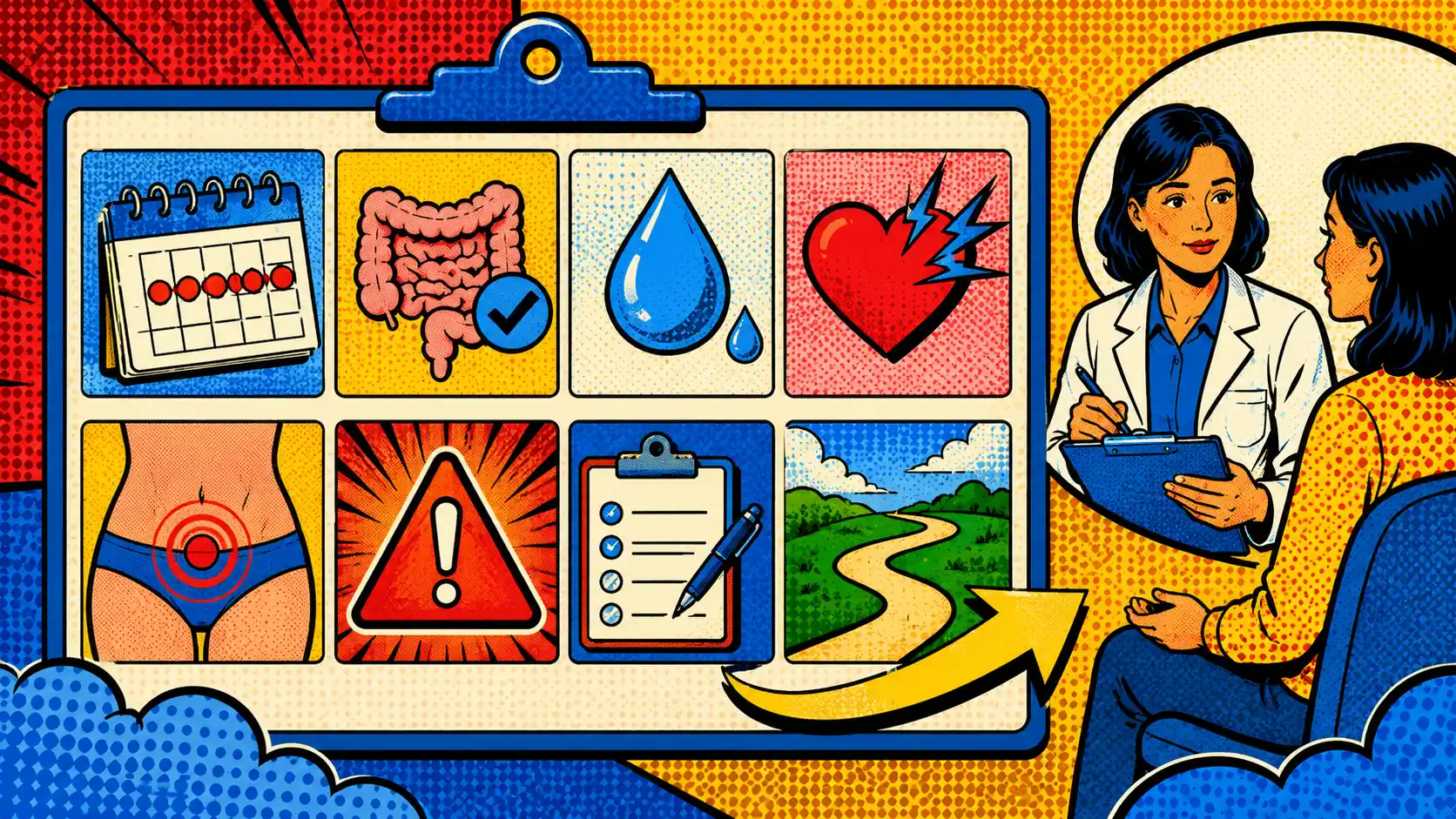
A familiar IBS pattern usually has some relationship to bowel movement changes, stool form, constipation, diarrhea, gas, meal timing, stress, sleep, or urgency. That does not make it easy, but it gives the pattern a bowel-centered logic.
A wider pelvic conversation becomes more important when symptoms include:
ACOG’s chronic pelvic pain guidance specifically flags worsening menstrual pain, pain beyond the first 1 or 2 days of the period, bowel or bladder symptoms that worsen during periods, pain throughout the month, and pain during sex as patterns that can point toward endometriosis 4.
None of those clues proves endometriosis. They do mean that another low-FODMAP reset, another probiotic, or another “was it lunch?” experiment may be the wrong next move.
IBS can still be part of the story. It may explain pain that rises with constipation, diarrhea, gas movement, urgency, incomplete emptying, meal timing, caffeine, stress, poor sleep, or a flare pattern. If your symptoms mainly follow stool pattern and gut context, start with the relevant IBS route rather than jumping straight to pelvic disease.
For cycle-specific gut changes, use menstrual cycle and IBS symptoms. For pain that feels amplified by stress, sex-related biology, anticipation, or gut-brain sensitivity, use stress, sex, and chronic visceral pain. For location-specific lower-left pain, use lower-left abdominal pain.
The goal is not to choose one identity for your symptoms. It is to make sure the right doors stay open.
NICE recommends telling people with suspected or confirmed endometriosis that a pain and symptom diary can help discussions 5. That is especially useful when gut and pelvic symptoms overlap.
Track for two to four weeks if symptoms are not urgent:
📥 Free Download: Pelvic-Gut Symptom Conversation Map — use it to bring cycle, bowel, urinary, sex-pain, and red-flag clues into one appointment conversation.
If a clinician says “it is probably IBS,” the tracker lets you ask a more precise question: “Does this still fit IBS if bowel and bladder symptoms worsen during my period, sex is painful, and pain is progressing?”
Do not wait on a diary if symptoms are severe or unsafe. Seek urgent care for sudden severe pelvic or abdominal pain, fainting, possible pregnancy with pain, fever, vomiting, heavy bleeding, black or bloody stool, blood in urine, severe dehydration, or rapidly worsening symptoms.
Also ask for care rather than self-managing if pain is steadily worsening, disrupting work or sleep, changing your ability to have sex, or causing you to cut more and more foods without a clearer answer.
| If the main situation is... | Use this page |
|---|---|
| "I am pregnant or postpartum and symptoms changed." | Pregnancy, postpartum, and IBS symptoms |
| "A teen needs bathroom access or school support." | IBS in teens school bathroom plan |
| "Symptoms changed around menopause or perimenopause." | Menopause, perimenopause, and IBS symptoms |
| "Symptoms follow my menstrual cycle." | Menstrual cycle and IBS symptoms |
| "Pelvic pain, sex pain, or possible endometriosis is part of the pattern." | This page |
| "Work, school, commuting, or bathroom access is the barrier." | IBS at work, school, and commuting |
| "Shift work, sleep timing, or rotating meals changed the pattern." | Shift work, sleep, meal timing, and gut symptoms |
Download: IBS Life Context Route Card for the situation-first chooser across pregnancy/postpartum, school, midlife, cycle timing, pelvic pain, public-day logistics, and shift-work rhythm.
| Situation | Best next read |
|---|---|
| Symptoms change by cycle timing | Menstrual cycle and IBS symptoms |
| Pain is sex-related, stress-amplified, or persistent | Stress, sex, and chronic visceral pain |
| Constipation comes with incomplete evacuation, straining, or pelvic-floor therapy questions | Pelvic-floor dyssynergia and IBS-C constipation |
| Symptoms are happening during pregnancy or after birth | Pregnancy, postpartum, and IBS symptoms |
| Lower-left abdominal pain is the main pattern | Lower-left abdominal pain |
| Normal gut signals feel painfully loud | Visceral hypersensitivity in IBS |
| You need a testing conversation map | IBS tests, celiac, SIBO, calprotectin, and colonoscopy |
| You need a focused appointment summary for persistent, progressive, or non-IBS-like symptoms | Doctor visit prep for IBS next steps |
| Today is already an active flare | IBS flare plan |
IBS can cause real abdominal pain and bowel changes. But IBS should not automatically explain pelvic pain, sex pain, urinary symptoms, progressive pain, or bowel symptoms that clearly worsen with the menstrual cycle.
If the pattern is bowel-centered, route through IBS care. If the pattern is cyclic, pelvic, sex-related, urinary, progressive, or unfamiliar, widen the conversation. Track the pattern if it is safe to do so, bring the evidence to a clinician, and escalate urgently for severe or rapidly changing symptoms.
This article is for informational purposes only and is not intended as medical advice. Please consult a qualified healthcare provider for diagnosis and treatment of any health condition.
Xam Riche is a gut health solopreneur and founder of YourFitNature, dedicated to helping people navigate digestive wellness through evidence-based information and personal experience. After years of struggling with IBS and bloating, Xam discovered the transformative power of the low FODMAP diet and now shares practical, science-backed guidance to help others find relief. While not a medical professional, Xam combines extensive research with lived experience to create accessible, empowering resources for the gut health community. Learn more about our mission
As an affiliate, we may earn from qualifying purchases.