 By • Published on May 16, 2026 • 6 min read • 4,459 views
This article is for informational and educational purposes only and does not constitute medical advice. Always consult with a qualified healthcare professional for diagnosis, testing, and treatment decisions.
Pregnancy and postpartum gut symptoms can look like IBS, but the safety threshold is different.
Constipation, diarrhea, reflux, bloating, pelvic pressure, and urgency can all show up around pregnancy and after birth. If you already have IBS, it is easy to file every change under the same old label. Sometimes that is useful. Sometimes it hides the fact that pregnancy, delivery, hydration, medications, pelvic-floor changes, or postpartum complications need a different route.
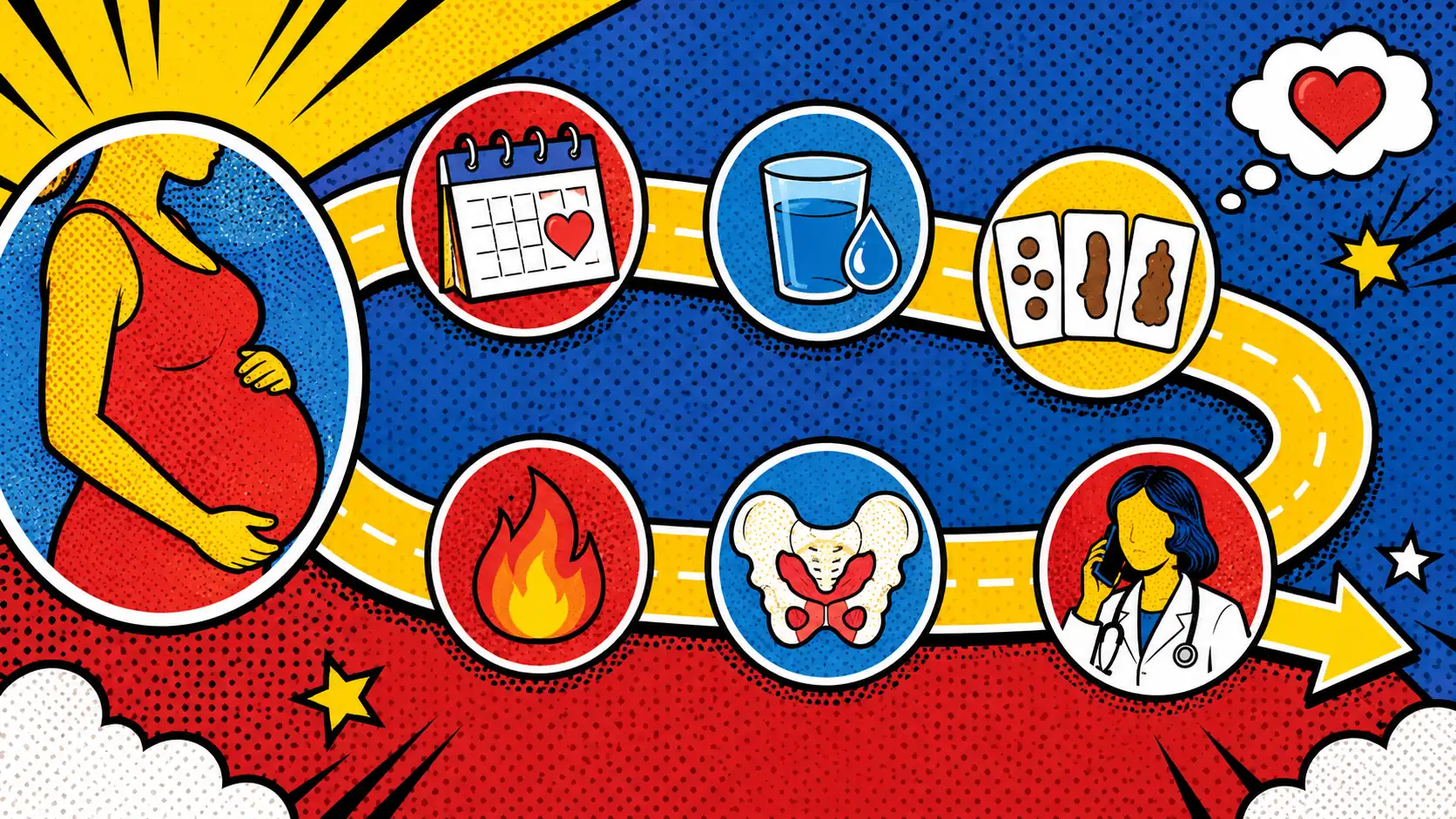
This guide helps you sort the overlap. It does not replace your OB, midwife, primary care clinician, gastroenterologist, or pelvic-floor physical therapist.
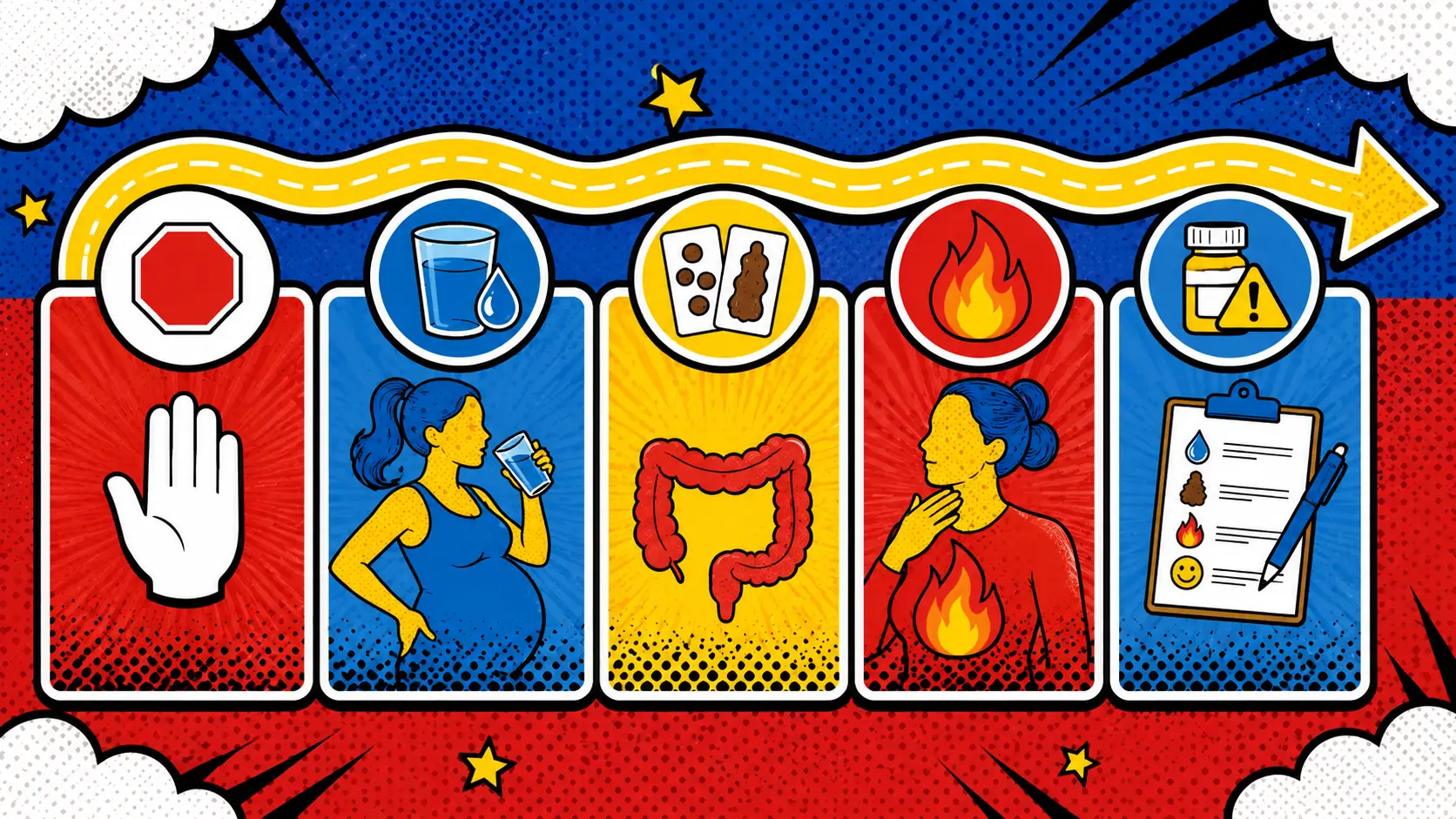
Do not self-manage gut symptoms if they come with clear warning signs. Call your health care professional, urgent care, or emergency services as appropriate for heavy bleeding, faintness, fever or chills, severe or worsening abdominal or pelvic pain, persistent vomiting, blood or black stool, signs of dehydration, or symptoms that feel rapidly different from your baseline.
ACOG advises seeing a health care professional for diarrhea lasting more than 2 days, blood or pus in stool, fever, severe abdominal pain, or dehydration signs such as thirst, dry skin, fatigue, dizziness, less frequent urination, or dark urine 1. ACOG postpartum warning content also highlights serious postpartum conditions that can involve heavy bleeding, fever/chills, and upper-right abdominal pain 2.
If the symptom is familiar, mild, and not paired with warning signs, move into pattern sorting.
ACOG lists constipation, diarrhea, acid reflux, hemorrhoids, IBS, IBD, and celiac disease among digestive-system issues, and notes that pregnancy hormones can slow the digestive system and contribute to constipation 3. That overlap is why the label alone is not enough.
| Symptom | Common pregnancy/postpartum context | IBS route to keep in view |
|---|---|---|
| Constipation | Hormonal slowing, iron, hydration shifts, lower activity, pelvic pressure | Constipation and bloating |
| Diarrhea | Infection, medication, antibiotics, food changes, stress, postpartum disruption | IBS flare plan |
| Reflux | Pregnancy-related reflux or pressure, meal timing, lying down | Acid reflux symptoms |
| Pelvic pressure or incomplete evacuation | Delivery recovery, pelvic-floor coordination, constipation | Pelvic-floor dyssynergia and IBS-C |
| Dehydration risk | Vomiting, diarrhea, breastfeeding fluid needs, heat, low intake | Hydration and gut symptoms |
Ask four questions:
If the pattern is familiar and warning signs are absent, your existing IBS tools may still help. If the pattern is new, severe, progressive, or tied to pregnancy/postpartum warning signs, ask for care sooner.
Do not start laxatives, anti-diarrheals, herbal products, high-dose magnesium, probiotics, digestive enzymes, or restrictive diets during pregnancy or postpartum without individualized guidance. Even familiar over-the-counter choices can have different considerations when pregnancy, breastfeeding, delivery recovery, bleeding, dehydration, blood pressure, or infant feeding are part of the picture.
The same caution applies to low FODMAP. If you need diet help during pregnancy or postpartum, ask for a dietitian and obstetric plan that protects symptom control and nutrient adequacy. Do not restart strict elimination from fear.
Bring a concise note:
Download the printable Pregnancy and Postpartum Gut Symptom Route Card before a call or appointment.
| If the main situation is... | Use this page |
|---|---|
| "I am pregnant or postpartum and symptoms changed." | This page |
| "A teen needs bathroom access or school support." | IBS in teens school bathroom plan |
| "Symptoms changed around menopause or perimenopause." | Menopause, perimenopause, and IBS symptoms |
| "Symptoms follow my menstrual cycle." | Menstrual cycle and IBS symptoms |
| "Pelvic pain, sex pain, or possible endometriosis is part of the pattern." | IBS, endometriosis, or pelvic pain |
| "Work, school, commuting, or bathroom access is the barrier." | IBS at work, school, and commuting |
| "Shift work, sleep timing, or rotating meals changed the pattern." | Shift work, sleep, meal timing, and gut symptoms |
Download: IBS Life Context Route Card for the situation-first chooser across pregnancy/postpartum, school, midlife, cycle timing, pelvic pain, public-day logistics, and shift-work rhythm.
| Situation | Best next read |
|---|---|
| Pelvic pain, cycle timing, sex pain, or urinary symptoms are part of the picture | IBS, endometriosis, or pelvic pain |
| You are sorting a different life-stage transition with newer bowel changes | Menopause, perimenopause, and IBS symptoms |
| Bathroom access, commute timing, or returning to work/school is the main barrier | IBS at work, school, and commuting |
| Rotating shifts, night feeds, poor sleep, or meal timing makes symptoms hard to read | Shift work, sleep, meal timing, and gut symptoms |
| Constipation and bloating dominate | Constipation and bloating connection |
| Incomplete evacuation or pelvic-floor questions stand out | Pelvic-floor dyssynergia and IBS-C constipation |
| Diarrhea, vomiting, heat, or low intake raises dehydration concerns | Hydration, electrolytes, and gut symptoms |
| Reflux or burning chest/throat symptoms dominate | Acid reflux symptoms |
| You need same-day IBS stop-sign sorting | IBS flare plan |
| Testing questions are now the main concern | IBS tests, celiac, SIBO, calprotectin, and colonoscopy |
Pregnancy and postpartum gut symptoms deserve a lower threshold for asking. That does not mean every constipation, diarrhea, reflux, or bloating episode is dangerous. It means the context matters more.
Use your IBS history as useful information, not as a reason to ignore new signals. If symptoms are familiar and mild, route through the relevant IBS guide. If symptoms are severe, new, progressive, dehydrating, bloody, feverish, or tied to pregnancy/postpartum warning signs, call your clinician before changing medicines, supplements, or diet rules.
Xam Riche is a gut health solopreneur and founder of YourFitNature, dedicated to helping people navigate digestive wellness through evidence-based information and personal experience. After years of struggling with IBS and bloating, Xam discovered the transformative power of the low FODMAP diet and now shares practical, science-backed guidance to help others find relief. While not a medical professional, Xam combines extensive research with lived experience to create accessible, empowering resources for the gut health community. Learn more about our mission
As an affiliate, we may earn from qualifying purchases.