 By • Published on May 18, 2026 • 8 min read • 4,748 views
This article is for informational and educational purposes only and does not constitute medical advice. Always consult with a qualified healthcare professional for diagnosis, testing, and treatment decisions.
Perimenopause and menopause can make gut symptoms harder to read. They can also make it tempting to explain every new bowel change with one sentence: "it is probably hormones."
That shortcut is too blunt. Midlife can bring sleep disruption, mood change, bladder symptoms, medication changes, supplement experiments, pelvic symptoms, and ordinary IBS noise into the same season. Menopause may be one clue in the pattern, but it is not a diagnosis and it should not erase a new bowel signal that deserves a wider look.
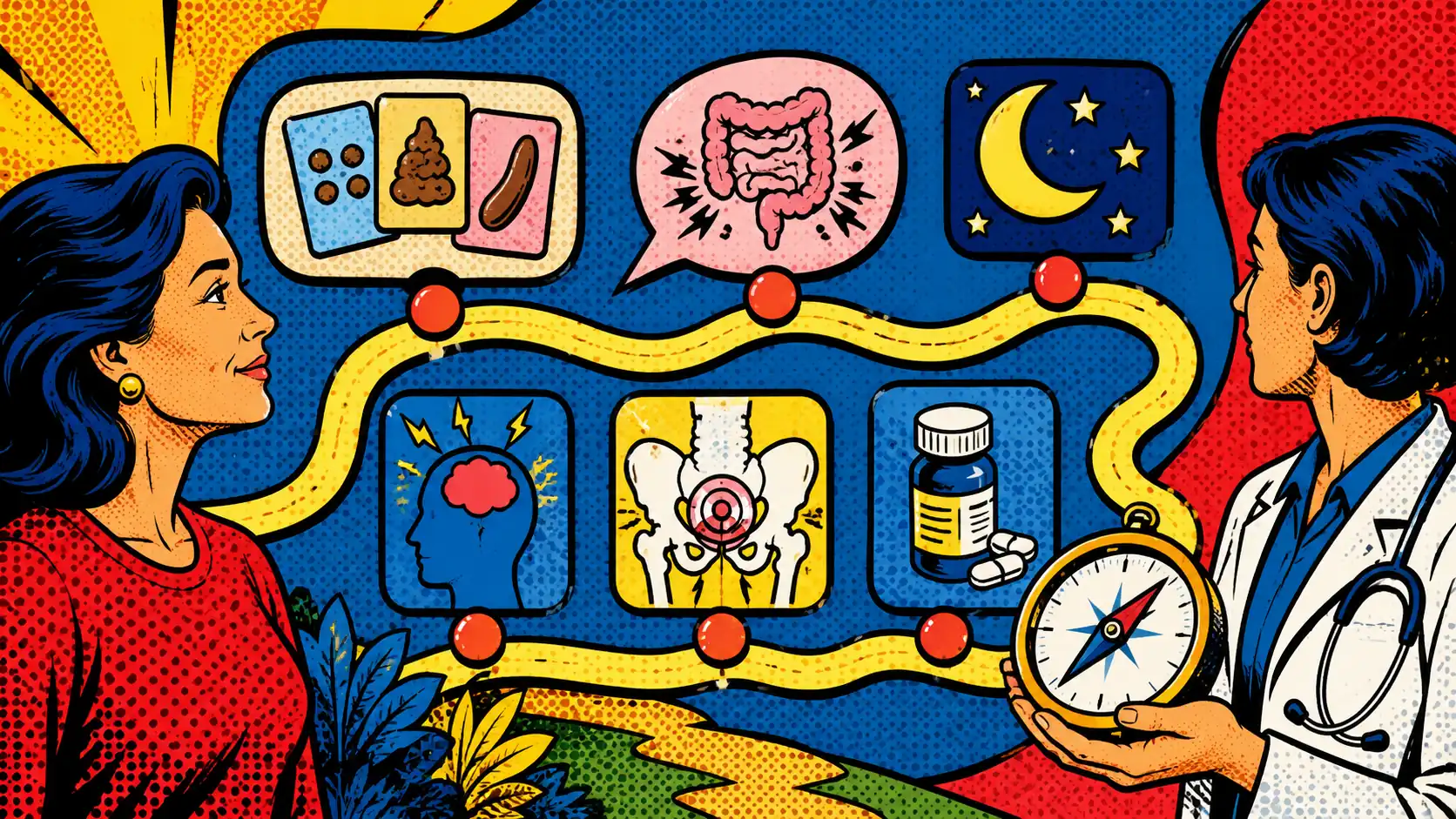
This guide is for route sorting. It is not a menopause explainer, a hormone therapy guide, or a supplement protocol.
Before troubleshooting IBS, look for clues that should not be filed under hormones. IBS is usually identified by abdominal pain plus changes in bowel movements, but anemia, rectal bleeding, black stools, and unintentional weight loss point toward another problem that needs evaluation 1.
Get medical help promptly for:
NIDDK lists severe pain, bloody or black stools, dehydration, and frequent vomiting among reasons to seek help with diarrhea, and lists rectal bleeding, constant pain, vomiting, inability to pass gas, fever, and unintentional weight loss among constipation warning signs 2 3. ACOG also says bleeding after menopause should be evaluated rather than ignored 4.
If the symptom is familiar, mild, and not paired with warning signs, then move into pattern sorting.
MedlinePlus describes the menopausal transition as a period that can include sleep trouble, mood change, vaginal dryness, and bladder issues 5. Those changes can sit beside gut symptoms without proving that hormones caused the bowel pattern.
That matters because the same person can be dealing with:
| What changed | Why it can confuse the read |
|---|---|
| Sleep disruption or night sweats | Poor sleep can make pain, urgency, and stress tolerance feel louder. |
| Stress load | A familiar IBS pattern may become more noticeable when recovery is worse. |
| New medicines or supplements | Iron, magnesium, antibiotics, hormone therapy, or "gut support" products can change stool pattern. |
| Pelvic, urinary, or sex-pain symptoms | These may need a gynecologic or pelvic-floor route, not a food-trigger experiment. |
| A genuinely new bowel pattern | Midlife timing does not remove the need to ask why the pattern changed. |
If the pain-volume dial is the main issue, use the deeper stress, sex, and chronic visceral pain bridge or the core visceral hypersensitivity in IBS page. If the timing is still clearly cycle-linked, the better route is menstrual cycle and IBS symptoms.
| Main lane | What to notice | Safer next route |
|---|---|---|
| Constipation | Hard stools, straining, incomplete evacuation, new medication timing | Compare with thyroid, constipation, diarrhea, or IBS when the wider medical lens matters. |
| Diarrhea | New urgency, dehydration risk, antibiotic timing, blood, or duration | Use IBS vs colorectal warning signs when the change is new or concerning. |
| Bloating | Meal pattern, constipation, pelvic pressure, visible distension | Keep bowel pattern and pelvic clues in view instead of treating bloating as a menopause-only symptom. |
| Sleep and stress overlap | Whether the same symptom gets louder after poor sleep or a stress spike | Use stress, sex, and chronic visceral pain when the context-sensitive pain loop is the dominant problem. |
| Pelvic, urinary, or sex-pain clues | Pain with sex, urinary symptoms, pelvic pressure, bleeding, or pain outside the bowel pattern | Use IBS, endometriosis, or pelvic pain for the wider safety route. |
| Medication or supplement shift | Hormone therapy, iron, magnesium, fiber, probiotics, digestive enzymes, laxatives | Bring the full list to care instead of changing several variables at once. |
Do not automatically assign the following to perimenopause or menopause:
Perimenopause can be part of the story. It should not become a blanket explanation that blocks the rest of the story from being checked.
Midlife is a common season for experimentation: magnesium for sleep or stools, fiber blends, probiotics, digestive enzymes, peppermint, hormone therapy, iron, and multivitamins can all enter the scene around the same time. If several variables changed together, the cleanest next move is not another addition. It is a list.
Bring the dose, start date, stop date, reason for use, and bowel effect you noticed. If the stack is messy, use the supplement stack audit for IBS before adding one more product.
Write down:
Download the printable Midlife Symptom Pattern Map before a visit or follow-up call.
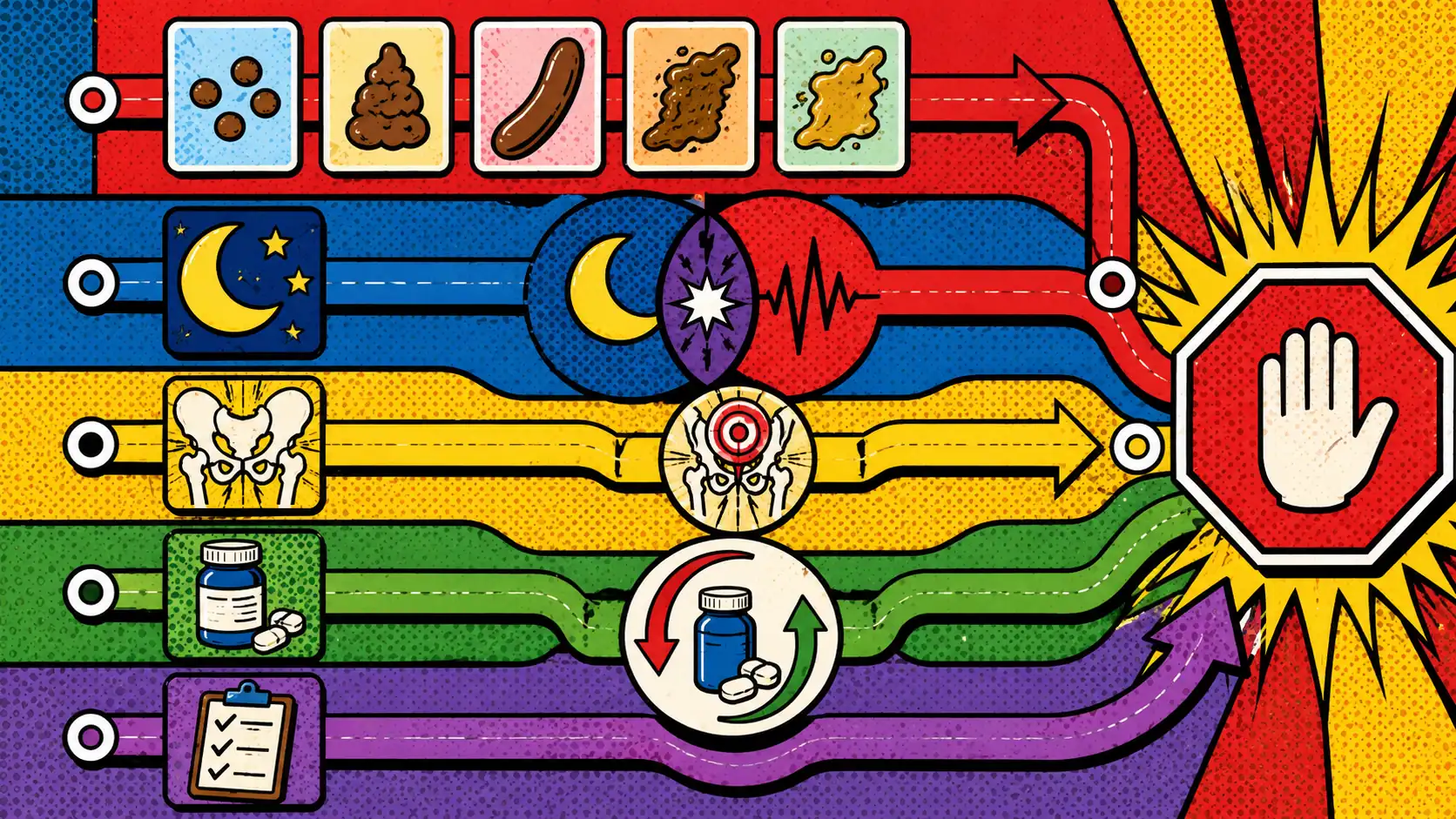
If you want to turn those notes into a cleaner appointment conversation, use doctor visit prep for IBS next steps.
| If the main situation is... | Use this page |
|---|---|
| "I am pregnant or postpartum and symptoms changed." | Pregnancy, postpartum, and IBS symptoms |
| "A teen needs bathroom access or school support." | IBS in teens school bathroom plan |
| "Symptoms changed around menopause or perimenopause." | This page |
| "Symptoms follow my menstrual cycle." | Menstrual cycle and IBS symptoms |
| "Pelvic pain, sex pain, or possible endometriosis is part of the pattern." | IBS, endometriosis, or pelvic pain |
| "Work, school, commuting, or bathroom access is the barrier." | IBS at work, school, and commuting |
| "Shift work, sleep timing, or rotating meals changed the pattern." | Shift work, sleep, meal timing, and gut symptoms |
Download: IBS Life Context Route Card for the situation-first chooser across pregnancy/postpartum, school, midlife, cycle timing, pelvic pain, public-day logistics, and shift-work rhythm.
| Situation | Best next read |
|---|---|
| Symptoms still rise and fall with cycle timing | Menstrual cycle and IBS symptoms |
| The question is another life-stage transition with changed safety thresholds | Pregnancy, postpartum, and IBS symptoms |
| Sleep timing, night shifts, or rotating meals are the clearest driver | Shift work, sleep, meal timing, and gut symptoms |
| Poor or disrupted sleep is the main signal | Sleep and gut symptoms in IBS |
| Sleep, stress, and hormone context make pain feel louder | Stress, sex, and chronic visceral pain |
| The same gut event simply feels disproportionately painful | Visceral hypersensitivity in IBS |
| Pelvic pain, urinary symptoms, sex pain, or bleeding are part of the picture | IBS, endometriosis, or pelvic pain |
| A thyroid-style comparator would help with constipation or diarrhea sorting | Thyroid, constipation, diarrhea, or IBS |
| New bowel changes feel persistent, progressive, bloody, or otherwise concerning | IBS vs colorectal warning signs |
| You need to prepare a focused next-step appointment | Doctor visit prep for IBS next steps |
Menopause and perimenopause can change the context around IBS symptoms. They do not earn every new bowel symptom a free pass.
Use hormone timing as one clue among several. Keep the bowel pattern, sleep, stress, pelvic symptoms, medicines, supplements, and stop signs on the same map. If the pattern is familiar and mild, route through the relevant IBS guide. If it is new, progressive, bloody, dehydrating, painful in a different way, or paired with pelvic or postmenopausal bleeding clues, widen the lens before assuming hormones explain everything.
Xam Riche is a gut health solopreneur and founder of YourFitNature, dedicated to helping people navigate digestive wellness through evidence-based information and personal experience. After years of struggling with IBS and bloating, Xam discovered the transformative power of the low FODMAP diet and now shares practical, science-backed guidance to help others find relief. While not a medical professional, Xam combines extensive research with lived experience to create accessible, empowering resources for the gut health community. Learn more about our mission
As an affiliate, we may earn from qualifying purchases.