 By • Published on April 6, 2026 • 14 min read • 2,413 views
This article is for informational and educational purposes only and does not constitute medical advice. Always consult with a qualified healthcare professional for diagnosis, treatment, medication decisions, or cardiovascular risk assessment.
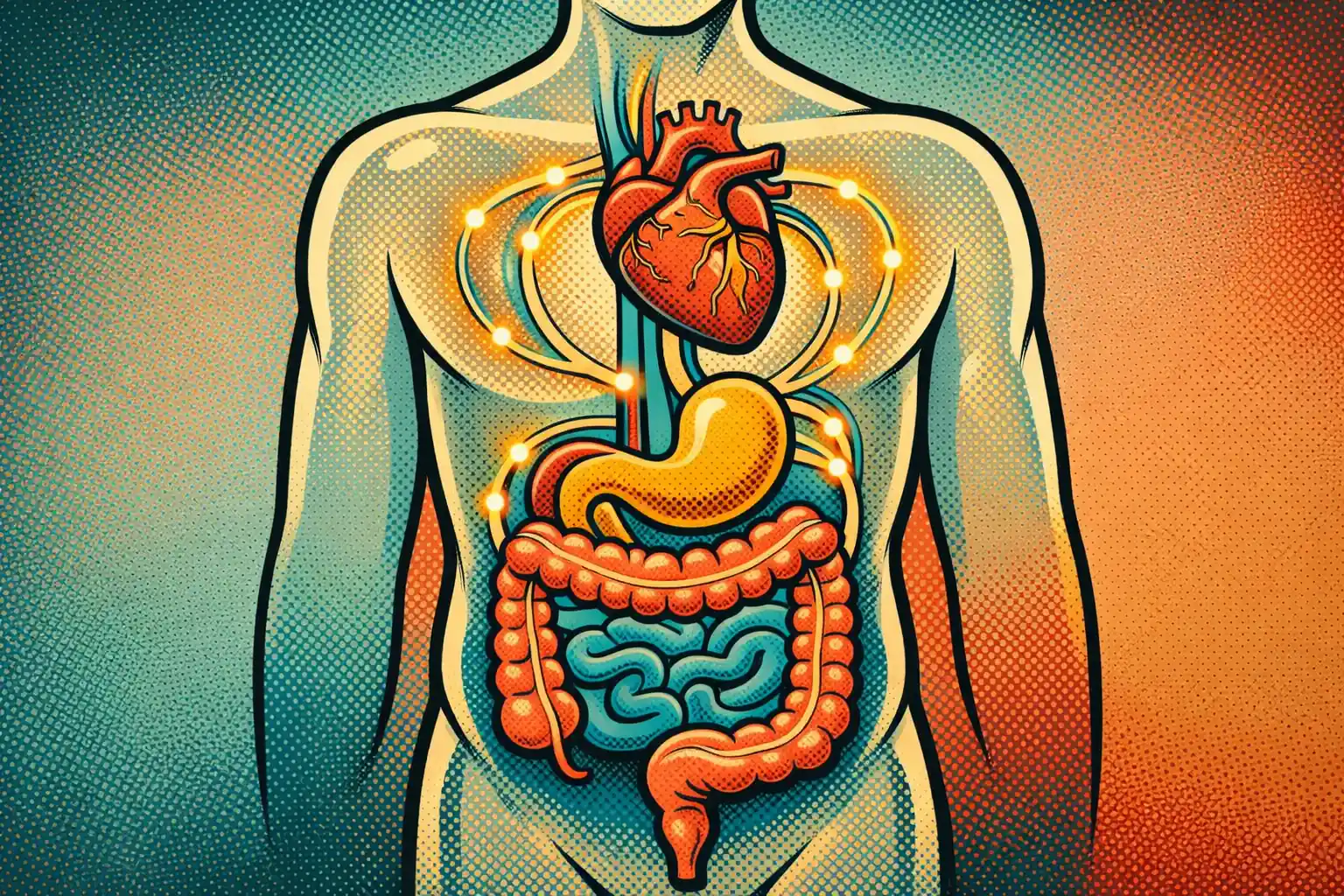
The gut-heart axis is not just a catchy wellness phrase. Gut microbes can influence cardiovascular signaling through metabolites such as TMAO and short-chain fatty acids, through immune activity, and through the health of the intestinal barrier. The useful takeaway is not that your microbiome replaces cardiology. It is that better gut health may support better cardiometabolic health when it sits inside the basics that still matter most: diet quality, blood-pressure control, movement, sleep, and medical follow-up.
This page answers a systems question: how might gut health connect with heart health, and what should a practical reader do with that information?
The short answer is that the gut-heart axis is a real research framework, but it should be used to support better prevention habits and better interpretation of microbiome science, not to replace cardiology or justify supplement hype.
This article is for readers who want the whole-body science shelf of the site. If your main problem is still symptom relief, start with how to reduce bloating. If your main question is stress-sensitive digestion rather than cardiometabolic science, use the gut-brain axis guide.
The internet often presents the gut-heart axis in one of two bad ways.
The first is dismissal: as if gut microbes are irrelevant unless you have bloating or IBS.
The second is hype: as if one probiotic, stool test, or TMAO headline suddenly explains heart disease.
Neither version is useful.
The better summary is this: the gut-heart axis is a real research framework describing how diet, microbes, microbial metabolites, immune signaling, and the intestinal barrier may influence cardiovascular physiology and disease risk 1 2.
That matters because it helps explain why gut health is not only a digestion issue. But it does not mean the microbiome overrides the fundamentals of cardiovascular prevention. If you have hypertension, diabetes, high cholesterol, or cardiac symptoms, standard medical care still matters more than any microbiome trend.
If your main reason for being here is gut symptoms rather than heart-risk education, start with our practical guide to gut-health basics and bloating relief. This article is the whole-body systems version: what the gut-heart connection is, where the evidence is strongest, and what you should actually do with it.
In plain English, the gut-heart axis is the conversation between:
That conversation is not happening in a vacuum. Sleep, medication exposure, exercise, smoking, alcohol, stress load, and overall diet quality all influence the picture too.
Here is the simplest way to visualize it:
This is why gut-heart research keeps returning to the same themes:
TMAO, or trimethylamine N-oxide, is the most famous gut-heart molecule for a reason.
Certain gut microbes convert dietary precursors such as choline and carnitine into trimethylamine, which the liver then converts into TMAO. Higher circulating TMAO has been linked in prospective studies with greater cardiovascular-event risk, which is why it gets so much attention 3.
But this is where many articles get sloppy.
The strongest fair statement is that TMAO is a gut-linked cardiovascular risk marker and mechanistic candidate, not a universal one-molecule explanation for plaque, heart failure, or blood pressure. Later work has complicated the simplistic story by showing that TMAO does not map cleanly onto plaque burden in every setting, even if it may still track with plaque instability or other risk pathways 4.
That means readers should respect TMAO, not obsess over it.
If a headline made you think "I need to micromanage one metabolite," step back. The evidence is much stronger for improving the whole pattern of diet and cardiometabolic risk than for chasing one lab concept in isolation.
Short-chain fatty acids, or SCFAs, are compounds your gut microbes make when they ferment fiber. The main ones people discuss are acetate, propionate, and butyrate.
This is one reason fiber keeps showing up in both gut-health and heart-health conversations. SCFAs appear relevant to blood-pressure regulation, immune balance, and inflammatory tone inside the gut-heart axis framework 5.
That does not mean every fiber supplement is magic.
It does mean that a more diverse, minimally processed, fiber-rich eating pattern is one of the most evidence-aligned ways to support the microbiome side of cardiometabolic health. In hypertension research, SCFA-focused prebiotic interventions are one of the more interesting translational directions right now, precisely because they try to influence this pathway instead of treating the microbiome as a vague black box 6 7.
If you want the nutrition-side explainer behind those prebiotic and fiber claims before you stretch them into cardiovascular hope, read what prebiotic fiber is and what it may help.
If you want the metabolite primer before staying in the cardiovascular shelf, start with short-chain fatty acids and the gut microbiota.
If you want the respiratory counterpart to this systems story, read our guide to the gut-lung axis. If you want the liver-metabolic version, the gut-liver axis is the next useful bridge. If you want the inflammatory-skin counterpart, use the gut-skin axis.
If you want the practical food version of that idea, use our guide to polyphenol foods for gut health. If you want the mechanism layer behind those food claims, read polyphenols and the gut microbiome explained.
The gut-heart axis is not just about named metabolites.
It is also about whether the gut barrier is functioning well and whether the gut is sending out more inflammatory signals than it should. Reviews of the gut-heart literature repeatedly discuss intestinal permeability, immune activation, bile-acid signaling, and endothelial stress as part of the broader cardiovascular picture 8 9.
Plain-English version: a less resilient gut environment may contribute to a more inflammatory systemic environment.
That matters most as a framework for prevention habits and whole-body thinking, not as a reason to self-diagnose a "leaky gut heart problem" from symptoms alone.
High blood pressure is one of the clearest places where gut-microbiota associations have been studied.
A 2023 systematic review and meta-analysis found lower Shannon diversity in hypertension and a higher Firmicutes-to-Bacteroidetes ratio across pooled data 10. That does not mean a stool profile can diagnose hypertension, but it does support the idea that blood-pressure patterns and microbiome patterns are not completely separate.
More interestingly, intervention research is beginning to ask whether SCFA-supportive prebiotic strategies can move blood pressure in the right direction. A phase II randomized crossover trial found that HAMSAB supplementation lowered 24-hour systolic blood pressure while increasing acetate and butyrate levels in untreated hypertensive adults 11. A newer meta-analysis also suggests meaningful blood-pressure improvement from prebiotic interventions, especially in hypertensive groups 12.
Useful takeaway: the microbiome may be part of the hypertension story, but this is still an adjunct science, not a replacement for blood-pressure checks, lifestyle treatment, or medication when needed.
The atherosclerosis section of gut-heart research is fascinating and messy at the same time.
On one hand, TMAO, inflammatory signaling, and microbial composition differences all keep appearing. A metagenome-wide association study found clear differences between healthy controls and people with atherosclerotic cardiovascular disease, including more Enterobacteriaceae and Streptococcus species 13.
On the other hand, systematic reviews of subclinical atheromatosis emphasize real heterogeneity. There are meaningful associations between microbiota components or metabolites and endothelial dysfunction, plaque, arterial stiffness, or calcium burden, but not a single tidy fingerprint that explains everything 14.
That means the atherosclerosis story should be told with restraint:
Heart failure research often returns to the gut hypothesis of heart failure: reduced perfusion, congestion, barrier dysfunction, dysbiosis, inflammatory signaling, and microbe-derived metabolites may reinforce each other as heart failure worsens 15.
This is one of the strongest examples of why the gut-heart axis should be seen as a two-way relationship. A struggling heart can worsen the gut environment, and a disrupted gut environment may worsen systemic stress in return.
Again, useful does not mean magical.
The heart-failure literature supports taking gut health seriously in broader cardiovascular care. It does not justify DIY treatment of heart failure with supplements or unproven microbiome protocols.
| Mechanism | Plain-English meaning | Best practical takeaway |
|---|---|---|
| TMAO | a gut-linked metabolite often studied as a cardiovascular risk marker | improve the whole dietary pattern and risk-factor control instead of chasing one villain |
| SCFAs | beneficial compounds gut microbes make from fiber | prioritize fiber diversity and minimally processed foods |
| Barrier and inflammatory signaling | the gut can influence whole-body inflammatory tone | symptom care matters, but cardiovascular evaluation still belongs in standard medicine |
| Hypertension associations | gut patterns and blood-pressure patterns overlap | use microbiome science to reinforce, not replace, blood-pressure care |
| Heart-failure gut hypothesis | heart dysfunction and gut dysfunction can amplify each other | complex disease needs clinician-guided care, not self-treatment |

This is the section most articles get wrong. The right response to the gut-heart axis is not panic and not biohacking theater.
It is better prioritization.
The most evidence-aligned gut-heart strategy is still boring in the best way:
If your digestive symptoms are the main barrier to eating well, work on those directly instead of pretending heart health is separate from them. Our guide to how to reduce bloating and improve gut basics is the better starting point for that.
This matters a lot for readers coming from IBS or food-trigger content.
Low FODMAP is a short-term symptom tool, not a cardiovascular diet. If you use it, the goal is still the three-step low FODMAP process of restriction, reintroduction, and personalization, not permanent low-fiber overrestriction. Use our guides to the 3-phase low FODMAP process and low FODMAP reintroduction if you need that structure.
If you stayed restricted for months and still do not feel better, stop tightening the diet blindly and read what to do when low FODMAP is not working.
Some probiotic or prebiotic approaches may help specific GI goals, and prebiotic blood-pressure research is worth watching. But "microbiome support" is not the same thing as "cardiovascular treatment."
If you are exploring symptom-targeted probiotics, use a strain-specific guide like which probiotic strains actually help IBS. Do not assume that a probiotic proven for bloating or bowel habits has also been proven to prevent atherosclerosis or heart failure.
Stress does not cause every heart problem and it does not explain away disease, but it does influence sleep, food choices, autonomic signaling, and symptom burden. If your gut symptoms are strongly stress-sensitive, read our guide to the gut-brain axis and stress-sensitive bloating. That will do more for most readers than reading one more metabolite headline.
Download: Heart-Support Gut Basics Checklist
If you want the shortest practical version of this article, use the Heart-Support Gut Basics Checklist for a one-page reminder of what to prioritize before you start chasing advanced microbiome claims.
| Reader thought | Reasonable interpretation | Overclaim to avoid |
|---|---|---|
| "My gut health may influence heart risk" | yes, that is a valid evidence-based idea | "all heart disease starts in the gut" |
| "Fiber and prebiotics may help" | promising, especially for microbiome support and some blood-pressure research | "prebiotics replace standard cardiovascular treatment" |
| "A probiotic might help me" | maybe for a specific GI goal | "one probiotic prevents plaque or heart failure" |
| "Gut symptoms and heart risk might overlap" | sometimes, through lifestyle and systemic pathways | "digestive symptoms alone tell me what my cardiovascular risk is" |
The gut-heart axis is most useful when it makes your health decisions more grounded, not less.
If it pushes you toward:
then it is helping.
If it pushes you toward:
then it is being used badly.
The gut-heart axis is a serious research concept and a useful clinical framing device. Gut microbes, microbial metabolites, and gut-derived inflammatory signals may influence cardiovascular risk, especially in areas such as hypertension, atherosclerosis, and heart failure 16 17 18.
But the smartest use of this concept is not microbiome obsession.
It is remembering that the gut is part of the same body as the heart.
That means:
If you want to see how the same “gut metabolites + inflammation” story shows up in another organ system, read our guide to the gut-kidney axis.
If you came here because gut symptoms are making it harder to eat well or take care of yourself, start with gut-health basics and bloating relief. If restriction has become its own problem, go to low FODMAP reintroduction. And if you are trying to separate reasonable microbiome support from overclaiming, our strain-specific probiotic guide is the better next step than another generic "gut reset."
Xam Riche is a gut health solopreneur and founder of YourFitNature, dedicated to helping people navigate digestive wellness through evidence-based information and personal experience. After years of struggling with IBS and bloating, Xam discovered the transformative power of the low FODMAP diet and now shares practical, science-backed guidance to help others find relief. While not a medical professional, Xam combines extensive research with lived experience to create accessible, empowering resources for the gut health community. Learn more about our mission
As an affiliate, we may earn from qualifying purchases.