
BloatingRoadmap
YourFitNatureplusdescription Logo
CommunityWorkshopBuild Your Stack
Mobile Menu Background
Top Picks
Blog
BloatingRoadmapCommunityWorkshop
Build Your Stack
YourFitNatureplusdescription Logo
Find Your Custom Stack

Heal Your Gut. Reclaim Your Energy.

Science-backed tools to rebalance your microbiome
and fuel your clarity from the inside out.

ShopBlogGut Bloating ResourcesBloating ToolkitCommunity Challenge
Hiipa Compliance
About YourFitNature
BloatingRoadmap
YourFitNatureplusdescription Logo
CommunityWorkshopBuild Your Stack
Mobile Menu Background
Top Picks
Blog
BloatingRoadmapCommunityWorkshop
Build Your Stack
When Anti-Inflammatory Eating Worsens IBS Symptoms: How to Translate Healthy Food Through Tolerance
Discover the secrets to a healthier gut!Learn more

When Anti-Inflammatory Eating Worsens IBS Symptoms: How to Translate Healthy Food Through Tolerance

By Xam Riche on May 8, 2026 • 6 min read

This article is for informational and educational purposes only and does not constitute medical advice. Always consult with a qualified healthcare professional before using symptom information to make diagnosis or treatment decisions.

Affiliate Disclosure: This post contains affiliate links. If you click and make a purchase, we may earn a commission at no extra cost to you.Medical Disclaimer: This article is for informational and educational purposes only and does not constitute medical advice. Always consult with a qualified healthcare professional before using symptom information to make diagnosis or treatment decisions.
Last updated on May 8, 2026
  1. Home
  2. Blog
  3. Anti Inflammatory Eating Worsens Ibs Symptoms
Gut Microbiome & Nutrition
1,594 views

Sometimes the healthier plan makes symptoms worse.

You add legumes, whole grains, salads, nuts, olive oil, fermented foods, berries, smoothies, seeds, and "gut-friendly" products. The pattern sounds anti-inflammatory. It may even be nutritionally stronger than what you ate before. But your IBS symptoms get louder: more bloating, more urgency, more gas, more fullness, or a less readable bowel pattern.

That does not mean healthy eating failed. It means the pattern needs translation through tolerance.

This article is a focused follow-up to why healthy foods still cause bloating and plant-based eating and gut symptoms. It is not an anti-Mediterranean article. It is a way to keep the useful nutrition direction while reducing symptom noise.
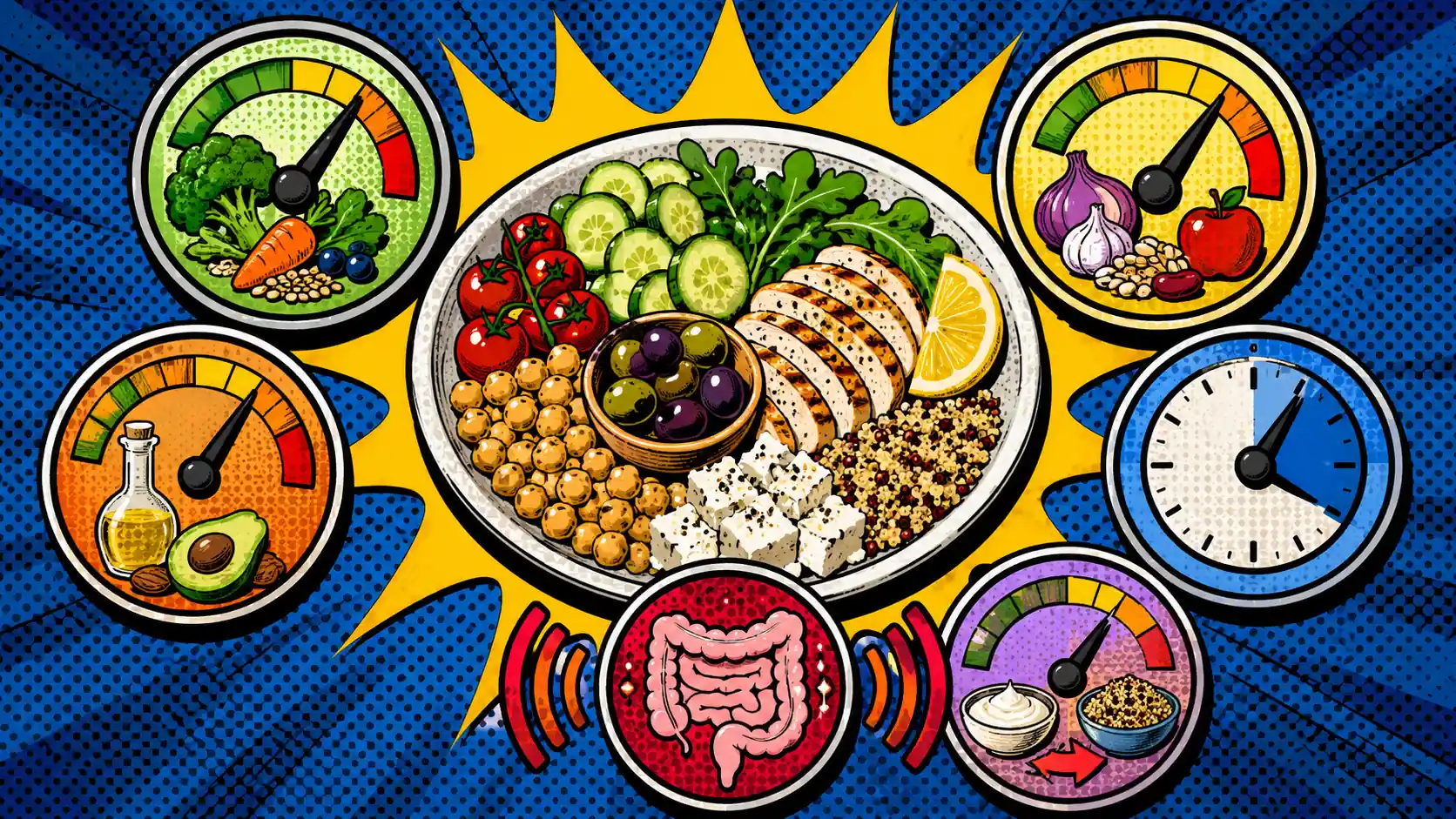
Pop art Mediterranean-style plate with fiber, FODMAP, fat load, meal timing, and product-swap dials around a symptom signal.
Healthy direction still needs gut-tolerance translation.

Anti-Inflammatory Is Not the Same as Gut-Tolerated Today

Healthy eating guidance often emphasizes vegetables, fruits, protein foods, healthy fats, and whole grains. CDC summarizes healthy eating in that broad direction 1.

But IBS troubleshooting asks a different question: can this gut tolerate this change, at this dose, in this meal, this week?

Those two questions can both be true:

  • A plant-rich pattern can be a high-quality direction.
  • A sudden plant-rich shift can be too noisy for a reactive gut.

The goal is not to prove the pattern wrong. The goal is to translate it.

Five Reasons Healthy Eating Can Get Noisy

1. Fiber Dose Jumps Too Fast

More beans, lentils, oats, chia, berries, whole grains, and vegetables can push fiber up quickly. NIDDK notes that some people have more gas symptoms when they consume too much fiber 2.

If this is your pattern, use fiber intake pattern mistakes before cutting all plant foods.

2. FODMAP Load Increases

Many nutritious foods are also FODMAP-relevant at certain portions. Legumes, some fruits, wheat-based foods, dairy, sweeteners, and some vegetables can all change the fermentable-carbohydrate load. Monash's public food list points readers to detailed app-based serving guidance because FODMAP fit is portion-sensitive 3.

This is why "healthy" and "low symptom" are not synonyms.

3. Fat Load Gets Concentrated

Olive oil, avocado, nuts, seeds, tahini, and oily dressings can be useful. But a large rich meal can worsen bloating for some people, and high-fat foods are one of the contributors NIDDK names in gas and bloating guidance 4.

For that focused issue, use avocado, nuts, and plant fats.

4. Product Swaps Add Hidden Ingredients

"Gut-friendly" bars, powders, yogurts, gummies, granolas, and sugar-free products may add inulin, chicory root, sugar alcohols, milk powders, dried fruit concentrates, or large fiber doses.

If symptoms followed the product swap more than the meal, use hidden FODMAPs in products.

5. Meal Timing Changes

Healthy eating often comes with a new schedule: skipped breakfast, grazing on snacks, late salads, compressed eating windows, or giant catch-up dinners. NICE advises regular meals and taking time to eat for IBS 5.

If timing is the main variable, use meal timing and gut symptoms.

Mediterranean-Style Eating Through an IBS Lens

Mediterranean-style eating is often described with foods like vegetables, legumes, whole grains, fruit, nuts, olive oil, fish, herbs, and minimally processed meals. That can be a strong nutrition direction. It can also combine several IBS-relevant levers in one week:

New "healthy" change IBS translation question
More legumes Is the serving too large or too frequent?
More whole grains Is this fiber style tolerated?
More raw salads Is raw volume harder than cooked vegetables?
More olive oil, nuts, avocado Is fat load concentrated?
More fermented foods Is the serving or product noisy?
More bars, powders, granola Is the label adding hidden triggers?

This is not a reason to abandon the pattern. It is a reason to rebuild it in a more readable order.
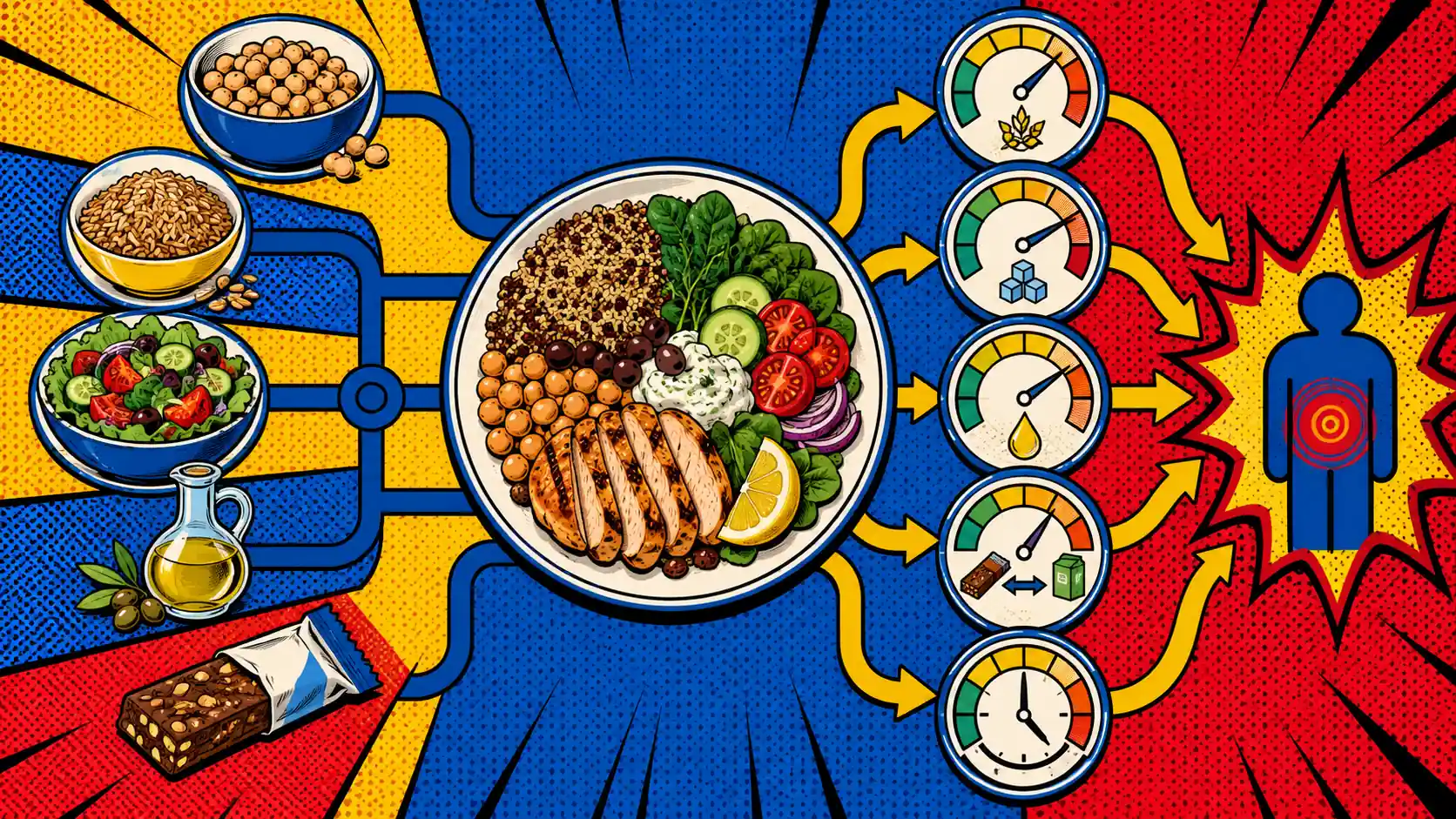
Pop art map translating healthy eating changes into fiber dose, FODMAP load, fat load, product swaps, and meal rhythm.
Translate the healthy pattern before you abandon it.

Download: Healthy-Eating Symptom Translation Worksheet and Plant-Rich Rebuild Ladder

How To Rebuild Without Abandoning Nutrition Quality

Use a rebuild ladder:

  1. Return to the simplest version of the meals that felt closest to stable.
  2. Keep regular meal timing for a week.
  3. Add one plant-food category at a time.
  4. Prefer cooked vegetables before large raw salads if raw volume is noisy.
  5. Increase fiber slowly.
  6. Keep rich fats moderate while you test fiber.
  7. Use plain foods before bars, powders, or "gut-friendly" products.
  8. Route persistent IBS patterns to low-FODMAP personalization or a dietitian.

ACG notes that low-FODMAP counseling is complex and can carry nutritional risks when handled without proper support 6. That is a reminder not to answer every symptom flare with more restriction.

What Not To Do Next

Avoid these overcorrections:

  • Do not decide all plant foods are bad.
  • Do not assume every symptom is "inflammation."
  • Do not stack probiotics, powders, fermented foods, and prebiotics at once.
  • Do not turn Mediterranean-style eating into a raw-salad challenge.
  • Do not keep shrinking the diet without a re-expansion plan.

If you improved with restriction but got stuck there, use diet diversity after low FODMAP to rebuild variety with a clearer signal.

Best Next Read by Situation

If this is the issue Best next read
Healthy foods are causing bloating Why healthy foods still cause bloating
Plant-rich meals are the main pattern Plant-based eating and gut symptoms
Whole grains and legumes are confusing Whole grains and plant foods
Fiber escalation got noisy Fiber intake pattern mistakes
You need to rebuild after restriction Diet diversity after low FODMAP

The Bottom Line

Anti-inflammatory or Mediterranean-style eating can be a useful direction and still be too noisy when it changes too much too fast.

Translate the pattern instead of abandoning it. Slow the fiber jump, check FODMAP load, moderate rich fats, simplify product swaps, steady meal timing, and rebuild variety one lever at a time.

X

Xam Riche

Gut Health Solopreneur & IBS Advocate

Xam Riche is a gut health solopreneur and founder of YourFitNature, dedicated to helping people navigate digestive wellness through evidence-based information and personal experience. After years of struggling with IBS and bloating, Xam discovered the transformative power of the low FODMAP diet and now shares practical, science-backed guidance to help others find relief. While not a medical professional, Xam combines extensive research with lived experience to create accessible, empowering resources for the gut health community. Learn more about our mission

Xam Riche - Gut Health Solopreneur & IBS Advocate. Xam Riche is a gut health solopreneur and founder of YourFitNature, dedicated to helping people navigate digestive wellness through evidence-based information and personal experience. After years of struggling with IBS and bloating, Xam discovered the transformative power of the low FODMAP diet and now shares practical, science-backed guidance to help others find relief. While not a medical professional, Xam combines extensive research with lived experience to create accessible, empowering resources for the gut health community.
Recommended Products

As an affiliate, we may earn from qualifying purchases.

Related Questions

Diet Diversity After Low FODMAP: How to Rebuild Variety Without Losing Symptom Signal

LOW FODMAP DIET

A restriction-recovery guide for readers who improved on low FODMAP but need a calmer way to rebuild food variety.

Nutrient Gaps on a Restrictive Gut Diet: Protein, Iron, Zinc, Magnesium, Calcium, and Fiber Diversity

GUT MICROBIOME & NUTRITION

A nutrient-adequacy utility for symptom-prone readers who have cut foods and now need a safer way to check what might be missing.

Fat, Sugar Alcohols, and Post-Meal Symptoms: When "Safe" Foods Still Trigger Reflux, Fullness, Bloating, or Urgency

IBS, BLOATING & GUT SYMPTOMS

A post-meal symptom sorter for readers whose food list looks safe but whose meal format, fat load, polyols, or products still trigger symptoms.

Meal Timing and Gut Symptoms: Why Skipping, Grazing, and Late Meals Can Make IBS Harder to Read

IBS, BLOATING & GUT SYMPTOMS

A practical meal-rhythm sorter for readers whose symptoms change with skipping, grazing, late meals, or compressed eating windows.

Dairy, Lactose, and Plant Milks: Gut-Symptom Fit Without Losing Calcium or Protein

GUT MICROBIOME & NUTRITION

A practical dairy and plant-milk sorter for symptom-prone readers who still need calcium, protein, and a readable label.

Post-Antibiotic Food Rebuilding: Diet Diversity Without Probiotic Overpromising

GUT MICROBIOME & NUTRITION

A food-first post-antibiotic rebuilding guide that separates mild disruption from symptoms needing medical review.

Avocado, Nuts, and Plant Fats: Gut-Symptom Fit Without Fear of Healthy Foods

IBS, BLOATING & GUT SYMPTOMS

A symptom-fit guide for readers who react to avocado, nuts, oils, or rich plant-forward meals and need a calmer way to test portion, fat load, and FODMAP nuance.

Constipation-First Breakfast Strategy: Oats, Kiwi, Fluids, Coffee, and Fiber Without More Bloating

IBS, BLOATING & GUT SYMPTOMS

A morning strategy for constipation-prone readers who need breakfast to support stool movement without turning fiber, coffee, or fruit into another noisy experiment.

When Anti-Inflammatory Eating Worsens IBS Symptoms: How to Translate Healthy Food Through Tolerance

GUT MICROBIOME & NUTRITION

A tolerance translator for readers whose healthy, anti-inflammatory, or Mediterranean-style eating pattern made IBS symptoms louder.

Visceral Hypersensitivity in IBS: Why Normal Digestion Can Feel Painful

GUT-BRAIN & WHOLE-BODY HEALTH

A gut-brain pain translator for readers whose IBS pain feels louder than the gut event itself and who need a safer next step than endless food restriction.

Showing 10 of 88

Stay Updated!

Subscribe to our newsletter for the latest articles and updates.

YourFitNatureplusdescription Logo
Find Your Custom Stack

Heal Your Gut. Reclaim Your Energy.

Science-backed tools to rebalance your microbiome
and fuel your clarity from the inside out.

ShopBlogGut Bloating ResourcesBloating ToolkitCommunity Challenge
Hiipa Compliance
About YourFitNature