 By • Published on April 6, 2026 • 14 min read • 4,327 views
This article is for informational and educational purposes only and does not constitute medical advice. Always consult with a registered dietitian, gastroenterologist, or other qualified medical professional before making significant dietary changes.
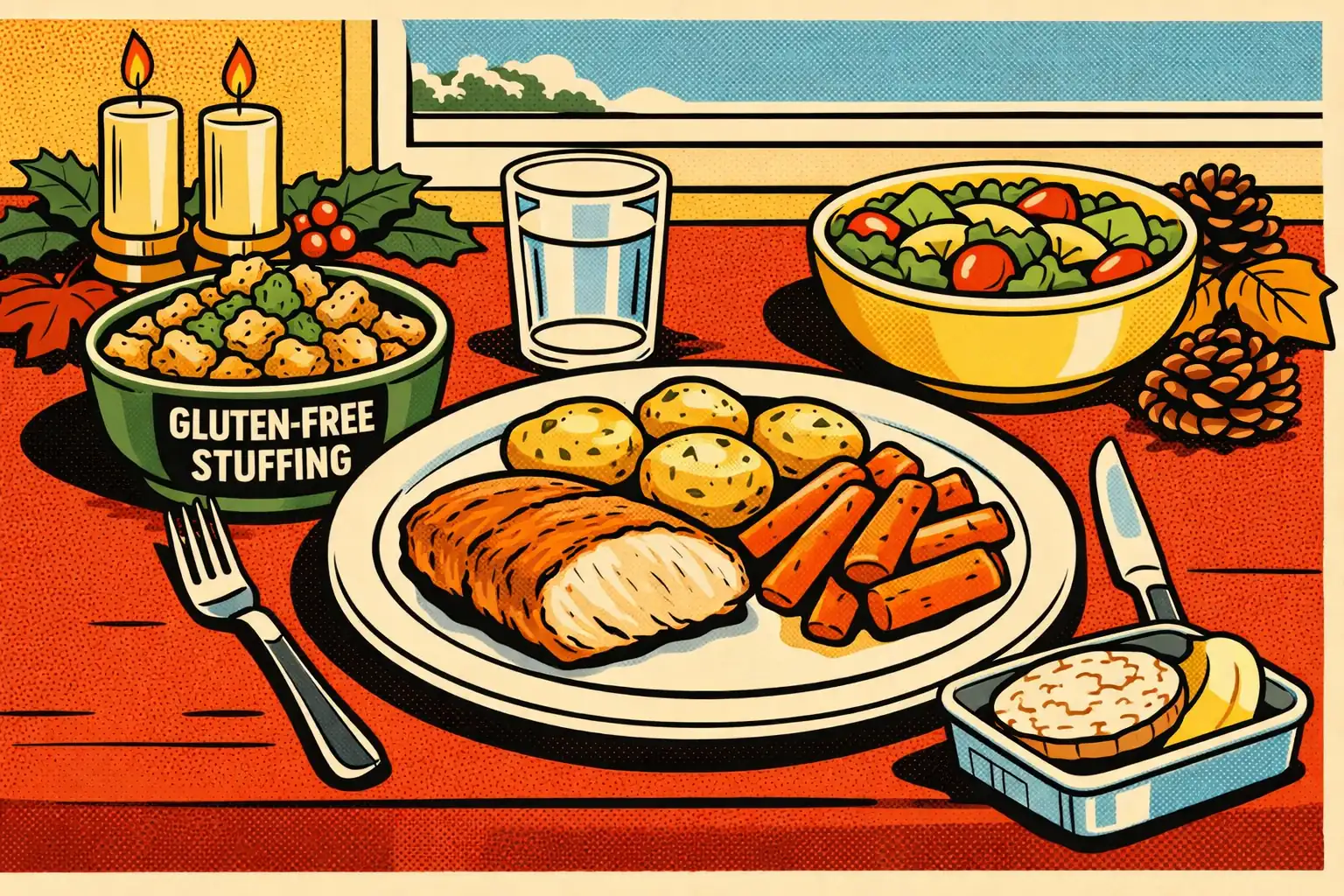
Holiday meals are rarely one clean food decision. They are appetizers, shared dishes, drinks, desserts, leftovers, and family pressure stacked into one long eating window. This guide gives you a calmer way through it: what to do before the event, what to put on your plate first, and how to reset the next day without turning one messy meal into a full IBS spiral.
Short answer: low-FODMAP holiday survival works better when you decide your role before the event, build one lower-risk plate first, and treat leftovers and next-day meals as part of the same symptom pattern instead of separate mistakes.
This page is for you if shared meals, buffets, drinks, dessert pressure, or family-style food make your symptoms harder to manage than ordinary home meals.
Use a different page first if your main issue is restaurant ordering or a travel-day food system. Start with low-fodmap-eating-out for menus and server scripts, or low-fodmap-travel-guide for airports, hotels, and road trips.
The hardest part of holiday food is not always the main meal. It is the full sequence around it.
You nibble from the appetizer table because you arrived hungry. You take a little stuffing even though you are not sure what is in it. Somebody tops your plate off before you can think. Dessert appears. Drinks stretch the evening longer than planned. Then the leftovers start a second round the next day.
That is why a low FODMAP holiday survival guide needs to be more than a list of foods to avoid. It needs to be a system.
Monash notes that a well-structured low-FODMAP plan can save time, reduce decision fatigue, and help you stay organized and confident in your food choices 1. Holiday meals strip away exactly that structure. The good news is that you do not need a perfect holiday menu. You need one reliable layer of control before the social pressure starts.
If the harder problem is restaurant-style ingredient uncertainty, keep restaurant ingredient-check logic nearby. If the holiday also includes flights, hotel stays, or long drives, add the low-FODMAP travel guide to your plan. This article covers the seasonal social-meal problem in the middle.
This page explains how to handle shared meals, buffets, drinks, leftovers, and social pressure when the problem is not one ingredient but the whole holiday setup.
It is not the main page for beginner low-FODMAP setup, general restaurant ordering, or travel logistics. Use low-fodmap-diet-for-beginners-how-to-start for the core system, low-fodmap-eating-out for menu strategy, and low-fodmap-travel-guide for airport, hotel, and road-trip planning.
Holiday meals are not just "eating out at home." They create a different kind of noise.
The eating window is usually longer. The dishes are more mixed. The ingredients are less obvious. Portion sizes drift. Social pressure makes it harder to stop and think. Monash's festive-season guidance reflects that reality by pushing readers toward planning ahead, regular snacks, and clearly reliable foods instead of trying to improvise in the moment 2.
That matters because holiday meals often combine several things that can blur the signal at once: uncertain alliums in shared dishes, a bigger-than-usual portion, drinks that already tend to bother you, and a meal structure that extends for hours instead of one sitting. Even if no single bite looks extreme, the whole event can still become noisy.
Bottom line: this guide is for the person who usually does better with some structure but knows holidays can flatten that structure fast.
Not every holiday needs the same rules.
If you are in Step 1, keep the day boring on purpose. Monash describes Step 1 as swapping high-FODMAP foods for low-FODMAP alternatives for about 2 to 6 weeks before moving on if symptoms improve 3. That is not the moment to improvise with six mixed dishes just because it is a special occasion. Familiar foods are doing a job.
If you are in Step 2, the holiday calendar is usually a bad place to force a challenge. Monash says reintroduction works by keeping your background diet stable while you challenge one FODMAP group over 3 days 4. If travel, late nights, buffet food, drinks, and social stress are all moving at once, the signal gets harder to read. In that case, pause and restart later with a calmer baseline using the full reintroduction guide.
If you are in Step 3, you have more room. Monash describes this stage as relaxing restrictions and building a personalized long-term pattern 5. That does not mean the holiday becomes a free-for-all. It means you can make intentional choices based on what you already know about your own tolerance.
If the three-step structure still feels fuzzy, reset with the 3 phases of low FODMAP before you decide how much flexibility this holiday actually deserves.
The fastest way to turn a holiday meal into chaos is to show up hungry and hope for the best.
Monash specifically recommends regular snacks during festive periods to reduce the tendency to overeat at large functions 6. That does not mean grazing all day. It means not turning the main meal into the first real food decision after hours of waiting.
One of the easiest control moves is to bring a dish that actually counts. Not a token garnish. A real share plate you can use if the main menu turns out to be full of gravies, stuffing, marinades, onion, or garlic. Monash recommends exactly that: bring a filling low-FODMAP option so you know there is something reliable on the table 7.
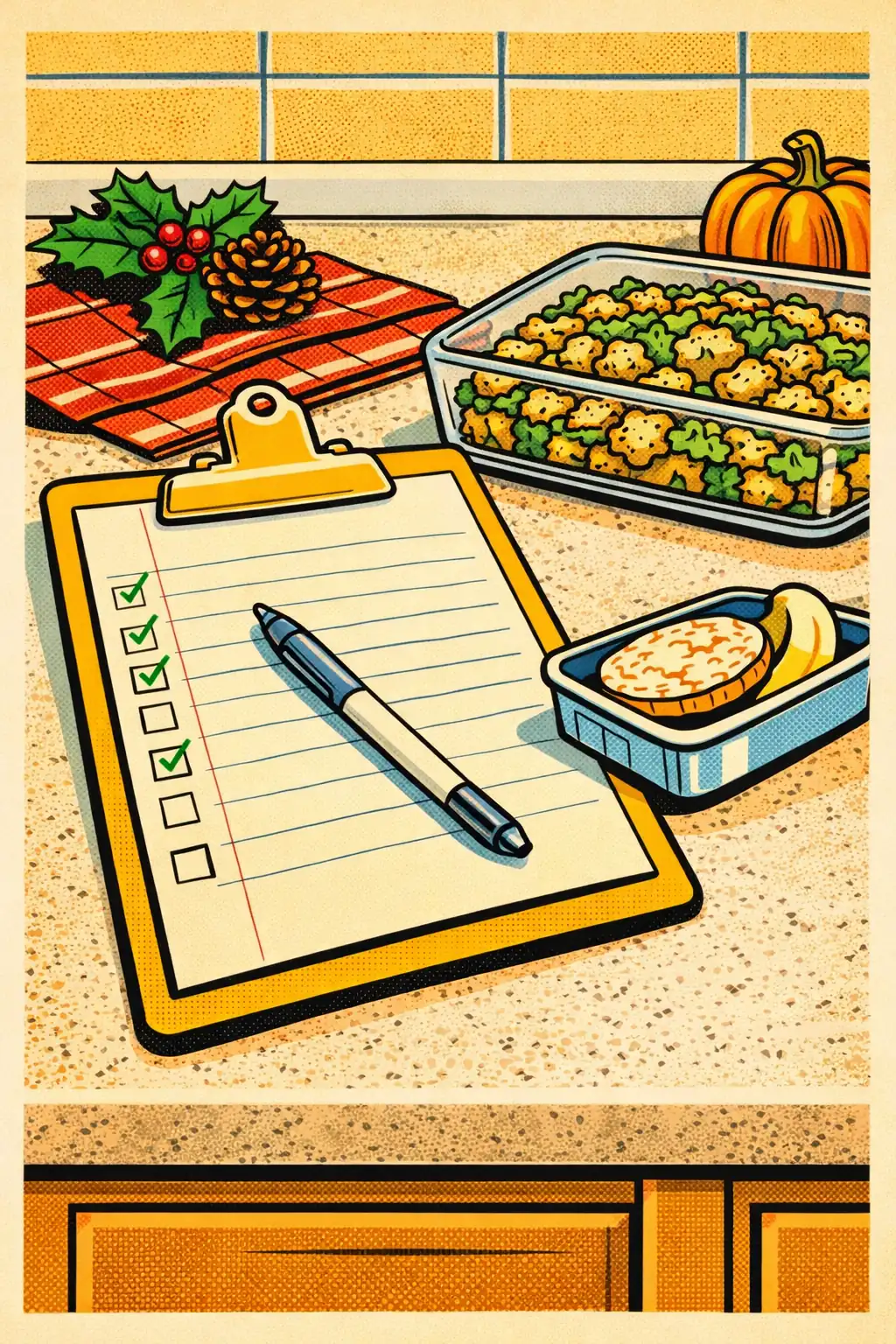
If you can ask about the menu early, do it. You do not need a forensic interview. Just ask about the places where uncertainty usually hides: gravies, stuffing, sauces, dips, marinades, and desserts. If the answer is vague, do not upgrade that dish to certain in your head. Downgrade certainty and plan the rest of your plate around that reality.
This is also a good place to carry one backup snack from your portable low-FODMAP snacks system or use the same calm prep mindset from low-FODMAP meal prep. If the holiday includes overnight travel, use the full travel-day food system rather than trying to reinvent it here.
[!TIP] Download: Low FODMAP Holiday Survival Checklist Use it before the event so the day already has a food plan before the buffet starts.
The first plate matters because it sets the tone for everything that follows.
Monash's festive-season guidance explicitly recommends filling up on lower-risk foods first, including plain roasted meats and simple sides such as potatoes, carrots, and parsnips, while being more careful with gravies and stuffing when ingredients are unclear 8. That is the right holiday mindset: start with what is readable, not with what looks most special.
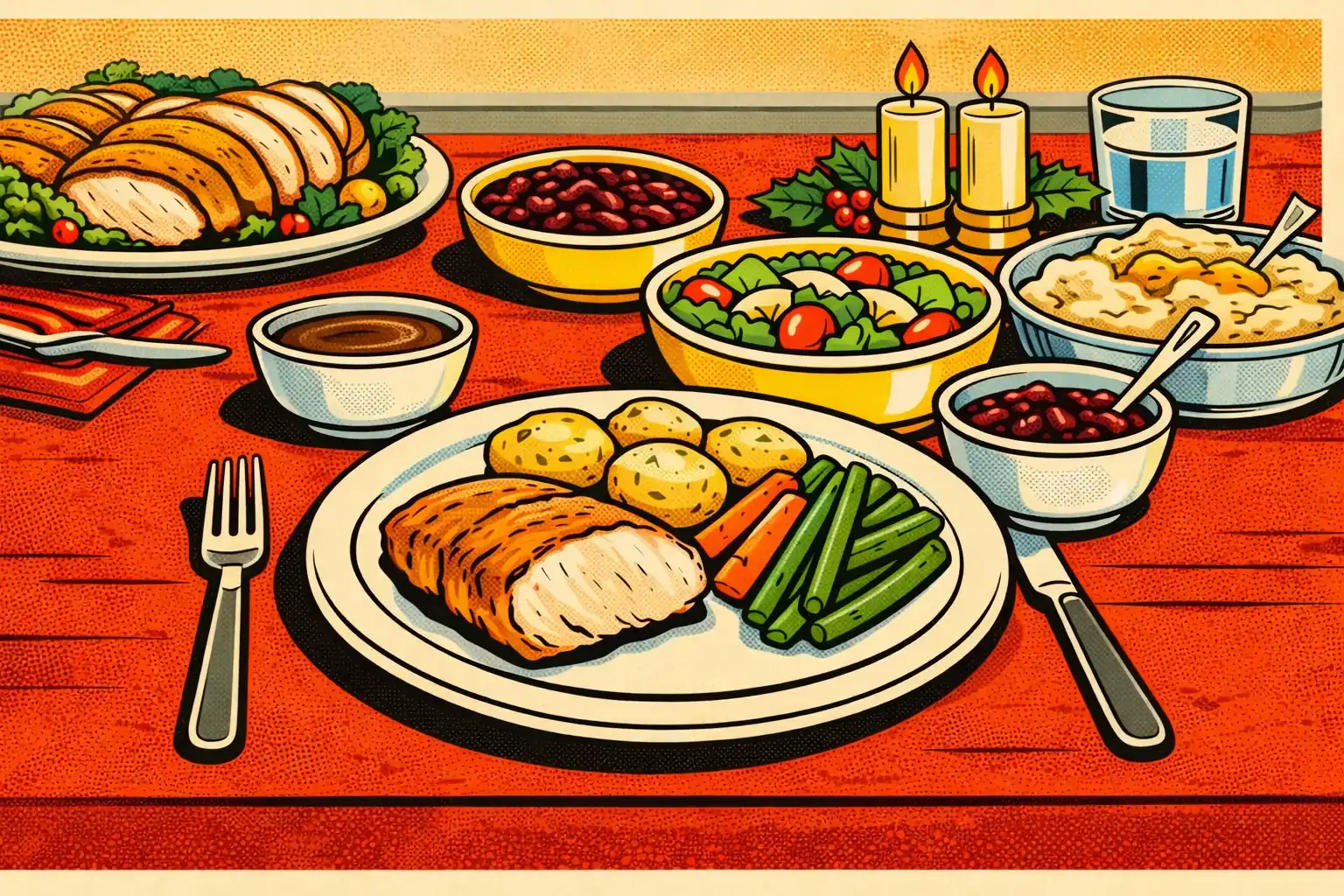
For most readers, the lowest-risk first plate looks more like this:
The higher-risk lane usually includes mixed casseroles, creamy sides, stuffing, gravies, dips, dessert bars, and anything that smells heavily of onion or garlic but has no clear ingredient list.
This does not mean you can never personalize the plate. It means your first move should lower the noise. If you are in Step 3 and choose to test some flexibility, smaller portions of uncertain foods are easier to read than a full plate of maybes.
Portion size still matters here. Monash's traffic-light guidance says green serves should still be understood as specific serving sizes 9. Monash's stacking guidance also explains that several green-light foods can still add up in a larger eating window 10. Holiday meals are a perfect real-life example of that pattern because the event often includes appetizers, dinner, dessert, and leftovers as one long chain. If that pattern keeps tripping you up, review FODMAP stacking before assuming one dish was the entire problem.
Drinks deserve the same honesty. Monash notes that alcohol and caffeine can exacerbate IBS symptoms in some people and suggests limiting alcohol where possible and consuming it with food if you do drink 11. Bottom line: if alcohol already tends to bother you, the holiday is not a good time to pretend it suddenly does not.
And do not let "gluten-free" do more work in your head than it should. Monash's label-reading update specifically calls out onion, garlic, inulin, FOS, and GOS as ingredients that deserve extra caution 12. If the issue keeps showing up in sauces, dips, or packaged party foods, widen the lens with hidden FODMAPs in sauces and products.
Holiday meals get harder when every food choice becomes a conversation.
The most useful script is usually the shortest one.
Try lines like:
These lines work because they are calm and final. They do not invite a debate. They also help keep the food choice from turning into a performance.
If social pressure itself tends to amplify symptoms, remember that the gut does not respond only to ingredients. Stress can lower your threshold too. If that pattern feels familiar, read more about stress and the gut-brain axis so you are not blaming every symptom wave on one bite of food.
Hosting gives you more control, but it also creates a different trap: trying to make every traditional dish fit perfectly.
That is usually not the goal that helps most.
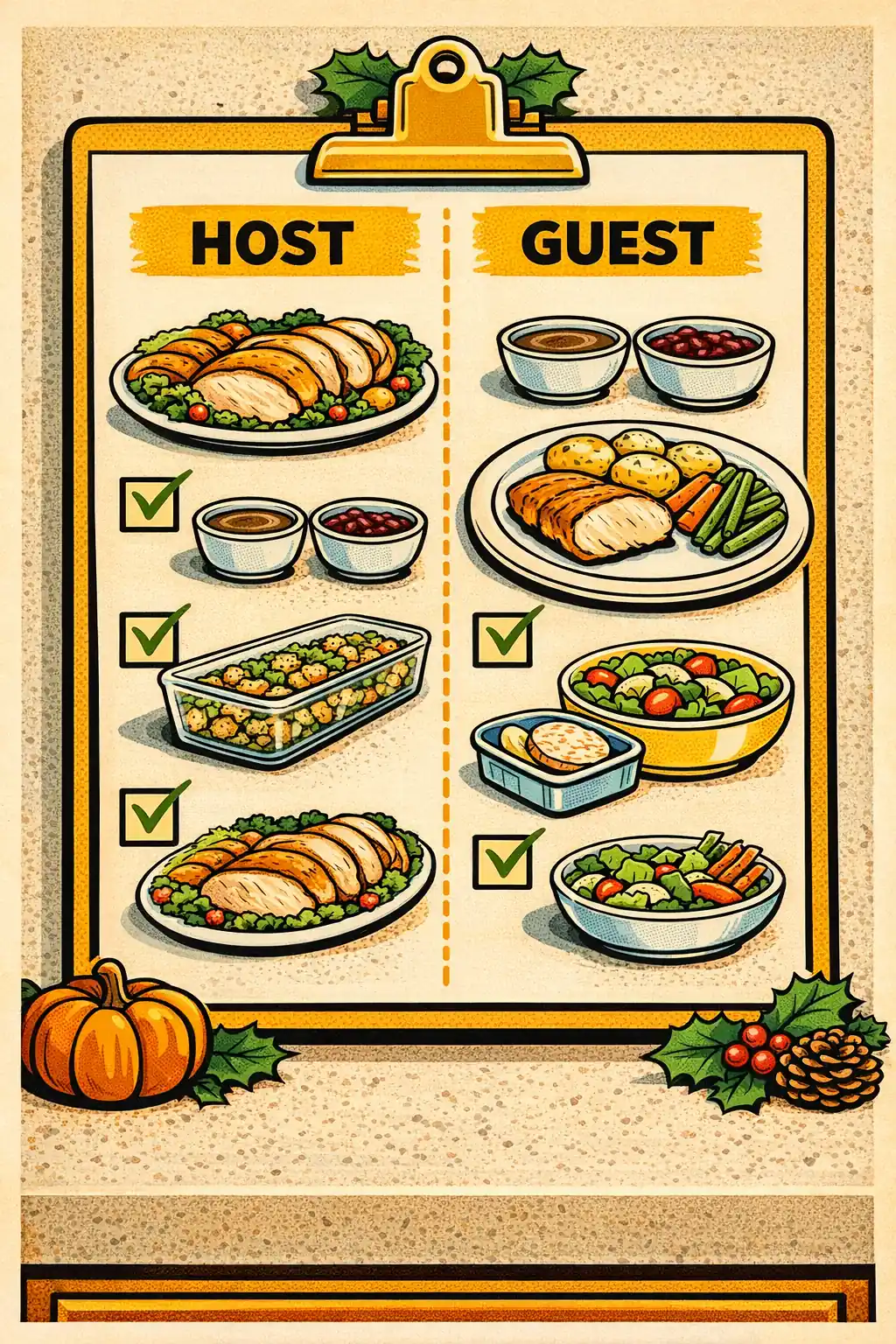
Start with one reliable main, two reliable sides, and one backup food that still works if the rest of the table gets noisy. That could mean keeping gravy separate, serving toppings on the side, or letting one mixed family dish exist without making it the whole meal.
Separating sauces and toppings matters more than making the meal look perfect. It lets everybody else customize while preserving one calmer route through the table for the person who needs clearer ingredients.
Then handle leftovers like part of the plan, not an afterthought. FoodSafety.gov says perishable foods generally should not sit out for more than 2 hours, or more than 1 hour above 90 F / 32 C 13. Its cold storage chart also shows that many cooked leftovers are best used within 3 to 4 days 14.
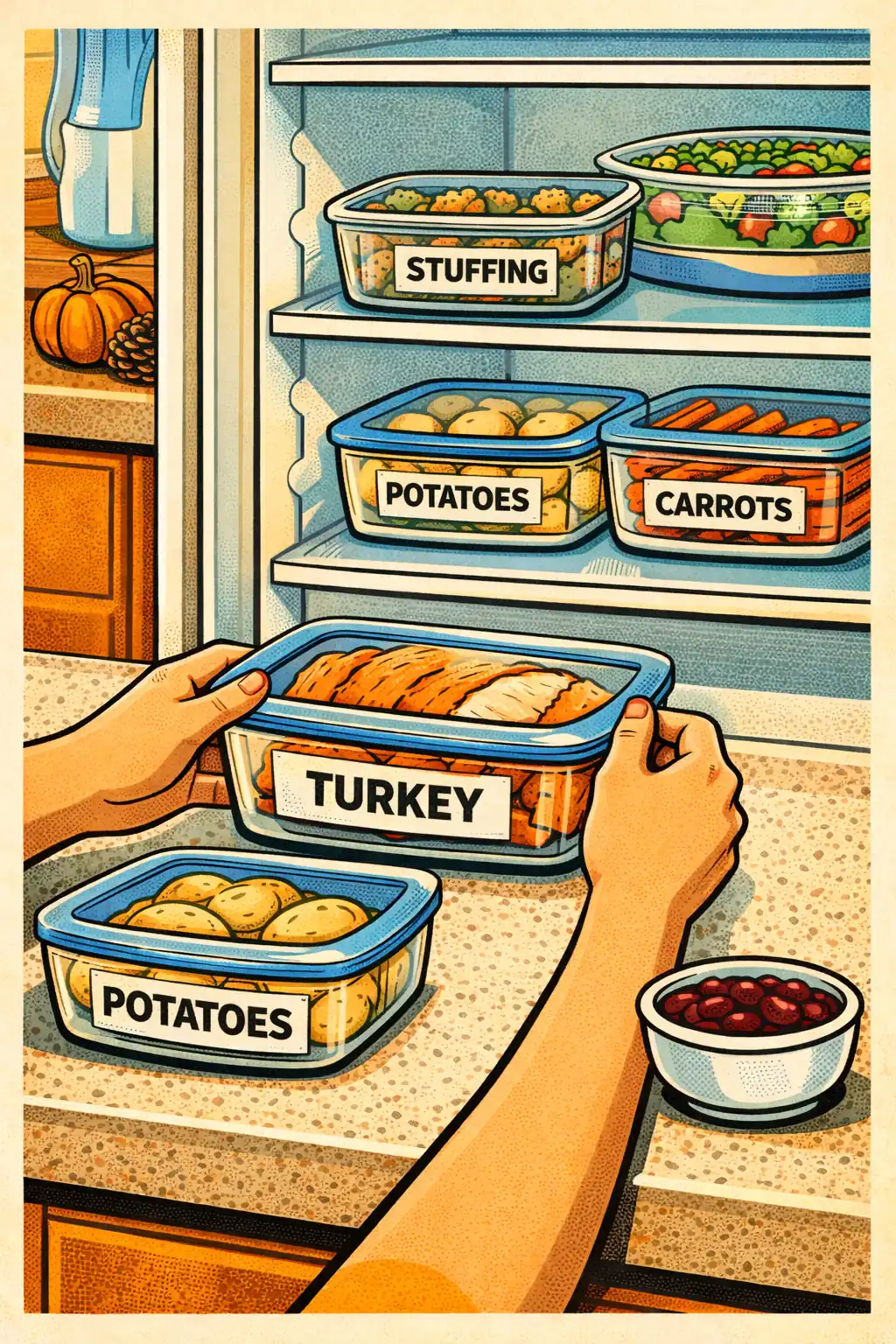
That means the smart hosting move is to portion leftovers early, refrigerate them promptly, and reheat them fully later. FoodSafety.gov recommends reheating leftovers to 165 F / 74 C 15.
[!TIP] Next Resource: Host vs Guest Holiday Planning Matrix Use it to decide how much control you actually have before the event starts.
The day after a holiday meal is where a lot of people make the next mistake.
They respond to one rough event by trying to make the whole diet stricter. That usually creates more noise, not less.
Use a simpler reset:
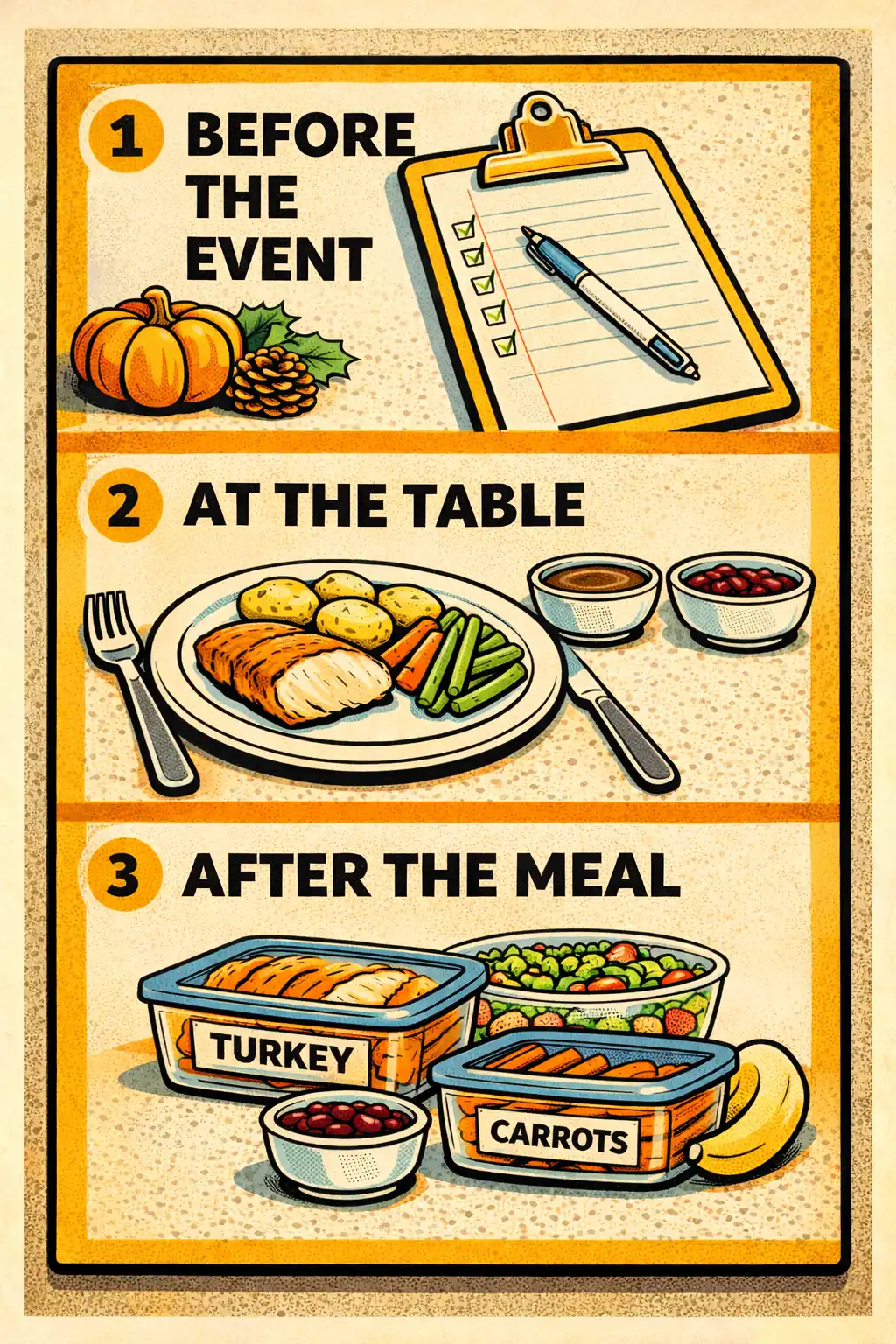
If symptoms keep flaring after the holiday, widen the lens. Maybe it was stacking. Maybe it was hidden ingredients. Maybe it was alcohol plus stress plus late eating. And maybe the holiday just exposed a broader pattern that was already there. If that is the case, move straight to what to do when low FODMAP is not working instead of cutting more foods by reflex.
Holiday food gets easier when the hard decisions happen earlier.
The system is simple:
Bottom line: you do not need to win every dish. You need a plan that keeps one holiday meal from turning into a whole week of confusion.
If you want the simplest next step, download the checklist, decide whether you are showing up as a host or a guest, and keep the restaurant strategy guide close for any meal where ingredient uncertainty is still the real problem.
Xam Riche is a gut health solopreneur and founder of YourFitNature, dedicated to helping people navigate digestive wellness through evidence-based information and personal experience. After years of struggling with IBS and bloating, Xam discovered the transformative power of the low FODMAP diet and now shares practical, science-backed guidance to help others find relief. While not a medical professional, Xam combines extensive research with lived experience to create accessible, empowering resources for the gut health community. Learn more about our mission
As an affiliate, we may earn from qualifying purchases.