 By • Published on May 14, 2026 • 7 min read • 3,906 views
This article is for informational and educational purposes only and does not constitute medical advice. Always consult with a qualified healthcare professional before using symptom information to make diagnosis, testing, or treatment decisions.
If wheat keeps looking guilty, the first question is not always "Should I quit gluten?"
Sometimes the safer question is whether you are dealing with celiac disease, wheat/fructan-triggered IBS symptoms, non-celiac wheat sensitivity, or a broader bowel pattern that only happens to flare around bread and pasta. Those routes can look similar in a food diary, but they do not lead to the same next step.
This page is built as a testing-first comparator. It helps you protect celiac testing when that question is still open, separate gluten from the rest of wheat, and avoid turning one suspicious food into a permanent rule before the pattern is clear.
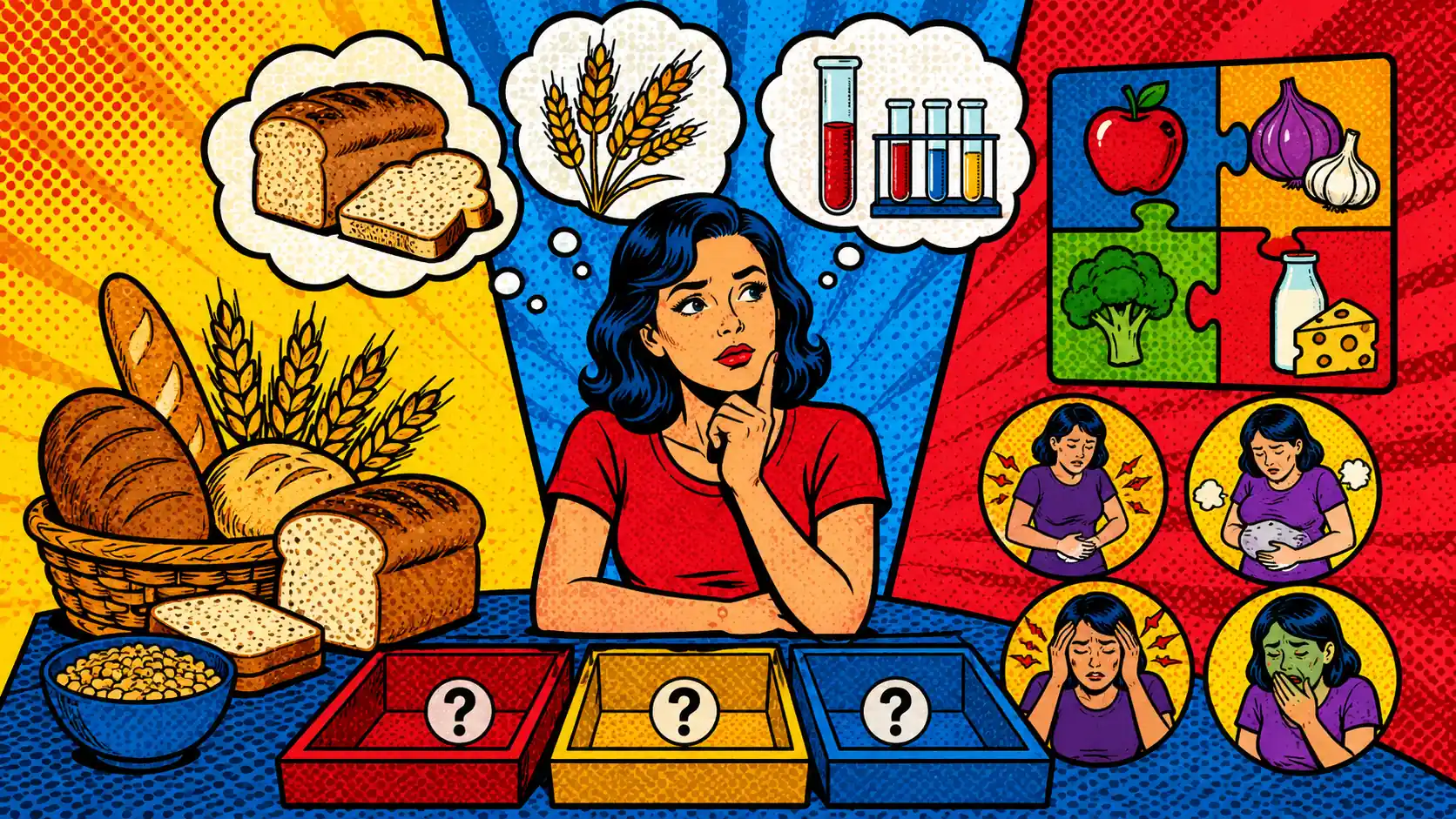
If celiac disease is still possible, do not remove gluten for weeks and then try to interpret the workup afterward. NIDDK says doctors use medical history, exam findings, blood tests, and sometimes intestinal biopsy to diagnose celiac disease, and it specifically warns against starting a gluten-free diet before diagnostic testing because that can affect results 1.
That one sequencing rule changes the whole page. If you are still eating gluten and celiac is on the table, the first practical move is often to ask about testing before you run a long elimination trial. If you need the wider test map around celiac, calprotectin, SIBO, and colonoscopy, use IBS tests, celiac, SIBO, calprotectin, and colonoscopy.
"Gluten bothers me" is often shorthand for three different possibilities.
| Question | What it means | Better next move |
|---|---|---|
| Could this be celiac disease? | An autoimmune reaction to gluten with possible malabsorption and extraintestinal clues | Keep gluten in place until testing is discussed. |
| Could wheat be aggravating IBS? | Wheat also contains fructans, which can trigger IBS symptoms in some people | Use structured low-FODMAP reasoning and later reintroduction, not a lifelong gluten assumption. |
| Could this be non-celiac wheat or gluten sensitivity? | Symptoms after gluten-containing foods without the blood or tissue findings of celiac disease | Treat it as a diagnosis of exclusion after the celiac question is handled. |
ACG notes that non-celiac gluten sensitivity is separate from celiac disease and that, for some people with these symptoms, FODMAP carbohydrates in the same foods may be the actual culprit rather than gluten itself 2. That distinction matters because wheat can be both a gluten-containing grain and a fructan-containing food. The symptom may be real while your first explanation is still incomplete.
Bloating after bread alone is not enough to diagnose anything. But some clues make the celiac conversation more important than a casual food trial.
NIDDK describes celiac disease as a condition that can involve digestive and non-digestive symptoms, including diarrhea, bloating, abdominal pain, anemia, fatigue, bone problems, neurologic symptoms, and dermatitis herpetiformis, an itchy blistering rash associated with celiac disease 3.
Bring testing up sooner when wheat symptoms sit beside:
If red flags such as blood in stool, major new bowel-pattern change, nighttime symptoms, or progressive weight loss are part of the picture, move above food sorting entirely and use IBS vs colorectal warning signs.
Wheat becomes a more plausible IBS/FODMAP question when the pattern behaves like other fermentable-carbohydrate reactions: dose matters, the symptom is mostly gas/bloating/pain with bowel change, and similar reactions show up with other FODMAP-rich meals rather than gluten-containing foods alone.
The ACG IBS guideline supports a limited low-FODMAP trial for some people with IBS, while keeping the process structured rather than endlessly restrictive 4. Monash explains that fructans are one FODMAP group humans do not break down well, which is part of why they can trigger IBS symptoms in susceptible people 5.
That is where the article should stay in its lane: not "gluten is innocent," but "wheat is more than gluten." If the broader diagnosis is still blurry, route to SIBO vs IBS vs food intolerance. If the question is how to test food tolerance inside a structured plan, use low-FODMAP foods for bloating relief and the reintroduction sequence behind it.
Use tracking to make the next decision cleaner, not to turn yourself into a permanent detective.
For one short window, note:
The goal is not to prove celiac disease at home. The goal is to arrive at the appointment able to say whether this looks like a testing-first problem, a structured FODMAP question, or a broader IBS comparator problem.
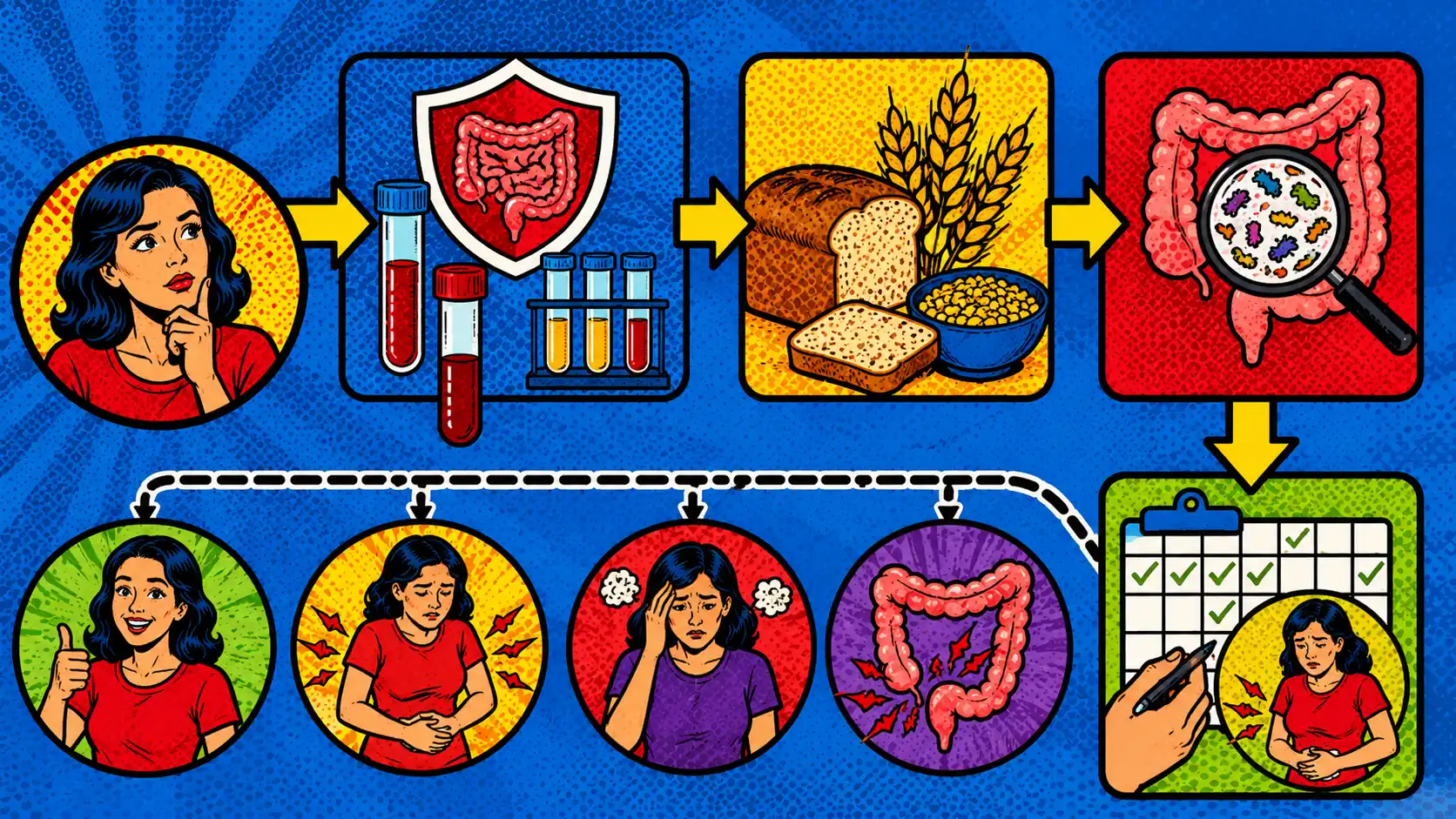
| If this is the pattern | Start here | Why |
|---|---|---|
| You still eat gluten and celiac clues are plausible | Ask about celiac testing | Testing gets harder to interpret after gluten removal. |
| The diagnosis is still blurry across bloating, food reactions, and bowel change | SIBO vs IBS vs food intolerance | Use the broader comparator before narrowing the food story too quickly. |
| Wheat seems to behave like a fructan/FODMAP trigger | Low FODMAP foods for bloating relief | Use this when the next question is tolerance testing rather than gluten identity. |
| Restriction is not producing a clear pattern | When low FODMAP does not work | Step back before making the diet narrower again. |
| Red flags are present | IBS vs colorectal warning signs | Safety outranks trigger experiments. |
Free Download: Gluten, Celiac, or IBS Sorting Checklist ? Use it to protect the testing sequence, capture the symptom pattern, and bring a cleaner question to the appointment.
| Situation | Best next read |
|---|---|
| You need the broad diagnostic comparison first | SIBO vs IBS vs food intolerance |
| You need to place celiac testing beside SIBO, calprotectin, or colonoscopy questions | IBS tests, celiac, SIBO, calprotectin, and colonoscopy |
| Wheat seems more like a FODMAP/fructan issue than a gluten-only issue | Low FODMAP foods for bloating relief |
| Restriction is making the pattern smaller but not clearer | When low FODMAP does not work |
| Warning signs sit above food-trigger troubleshooting | IBS vs colorectal warning signs |
This is not a race to label wheat as safe or unsafe. It is a sequencing problem. Protect celiac testing first when that question is open. Then separate gluten from the rest of wheat, compare the broader bowel pattern, and use structured food testing instead of a permanent elimination reflex.
If the pattern points toward celiac clues, bring that question to a clinician before you go gluten-free. If it behaves more like an IBS/FODMAP issue, use the broader low-FODMAP and comparator routes instead of turning one food into the whole diagnosis.
Xam Riche is a gut health solopreneur and founder of YourFitNature, dedicated to helping people navigate digestive wellness through evidence-based information and personal experience. After years of struggling with IBS and bloating, Xam discovered the transformative power of the low FODMAP diet and now shares practical, science-backed guidance to help others find relief. While not a medical professional, Xam combines extensive research with lived experience to create accessible, empowering resources for the gut health community. Learn more about our mission
As an affiliate, we may earn from qualifying purchases.