 By • Published on May 5, 2026 • 9 min read • 2,194 views
This article is for informational and educational purposes only and does not constitute medical advice. Always consult with a registered dietitian, gastroenterologist, pharmacist, or other qualified healthcare professional before starting a new supplement, especially if you are pregnant, receiving chemotherapy, taking medication, preparing for surgery, or managing persistent digestive symptoms.
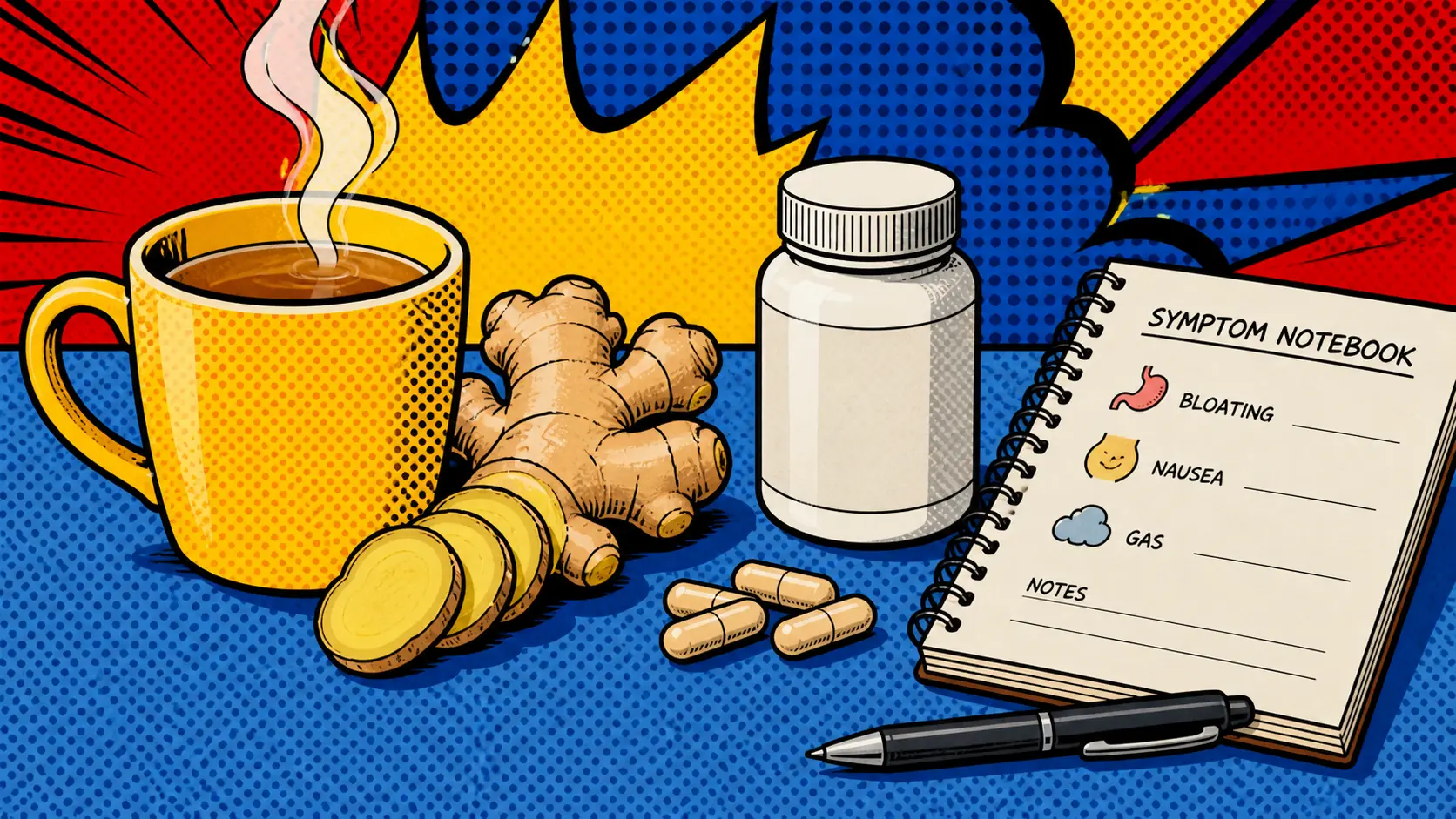
Ginger sounds simple until you start shopping. One page says to sip ginger tea. Another says capsules are stronger. A product roundup promises digestive support, while someone else swears fresh ginger fixed nausea overnight. The better question is not which ginger product is best. It is which form, if any, fits the symptom you are actually trying to understand.
Short answer: ginger tea can fit a gentle, food-adjacent experiment for mild nausea or post-meal comfort. Ginger capsules or extracts can be more measurable, but they move the decision into supplement-label, dose, interaction, and side-effect territory. Neither form is a cure for persistent or unexplained digestive symptoms.
This page is for you if you are comparing ginger tea, capsules, extracts, or chews for nausea, fullness, bloating, or vague digestive discomfort and want a practical decision instead of another supplement pitch.
Use a different page first if your main pattern is early fullness after small meals, repeated upper-stomach discomfort, or nausea that keeps coming back. Start with functional dyspepsia before turning that pattern into a ginger question.
If you want the broader food-first utility before this tea-versus-capsule comparison, use ginger for nausea, fullness, and digestive discomfort as the parent guide.
Ginger tea and ginger supplements are not two versions of the same promise. They are two different experiment formats.
Tea is usually less standardized. The amount of ginger depends on the root, bag, powder, steeping time, serving size, and how much you actually drink. That can be a weakness if you are trying to run a measured trial. It can also be a strength if your goal is a small food-style routine rather than a supplement commitment.
Capsules, tablets, extracts, and chews are easier to measure. The label may tell you a serving size, extract amount, or standardized constituent. But that does not make them automatically better. It makes them more supplement-like. FDA explains that dietary supplements are not approved before marketing in the same way drugs are, and supplement claims cannot legally present a product as diagnosing, treating, curing, or preventing disease 1.
So the useful comparison is:
| Question | Ginger tea | Ginger supplement |
|---|---|---|
| Is it dose-controlled? | Usually no | More likely |
| Is it food-adjacent? | Yes | Less so |
| Is label quality important? | Less central | Very central |
| Is it automatically safer? | No | No |
| Best use case | Gentle comfort routine | Short, measured trial after safety check |
The mistake is assuming that "natural" means harmless or that "stronger" means more appropriate. A capsule can be more measurable without being the right next step.
Ginger belongs most clearly in the nausea conversation.
NCCIH summarizes ginger as a commonly used oral herb and notes that evidence varies by nausea context. It is not a blanket endorsement for every kind of nausea, and it is especially cautious around chemotherapy-related and postoperative nausea claims 2.
That matters because many "digestive health" pages stretch nausea evidence into claims about bloating, IBS, detox, metabolism, or gut healing. Those are not the same question.
If the symptom is mild, occasional queasiness after a meal, ginger tea may be a reasonable first format. It is easier to treat as a low-drama comfort routine. If the symptom is frequent, severe, medication-related, pregnancy-related, or connected to cancer treatment, that is not a casual tea-versus-capsule decision. It belongs in a clinician conversation.
Fullness is where ginger gets more interesting and more overclaimed.
One small randomized double-blind crossover study in 11 people with functional dyspepsia found that ginger accelerated gastric emptying compared with placebo. But the same study found no difference in gastrointestinal symptoms 3.
That is an important distinction. Faster emptying is a possible mechanism. It is not proof that ginger reliably fixes fullness, nausea, or upper-abdominal discomfort.
Functional dyspepsia itself can involve early fullness, uncomfortable fullness after meals, upper-abdominal discomfort, nausea, bloating, and belching 4. If that symptom pattern keeps repeating, the better next step is not adding more ginger forms. It is sorting whether the pattern fits functional dyspepsia, reflux, gastroparesis, medication effects, or another upper-GI issue.
Bloating is a mechanism question before it is a ginger question.
It can come from fermentable carbohydrates, constipation, lactose intolerance, swallowed air, meal size, reflux overlap, IBS-style sensitivity, or upper-GI fullness. A warm ginger drink may feel soothing. That does not mean ginger has identified or solved the cause.
If bloating follows specific meals, compare the pattern with why healthy foods still cause bloating. If the bloating seems tied to dairy, beans, or specific meal components, digestive enzymes for bloating may be a more precise question than ginger. If the whole IBS plan is failing, use low FODMAP troubleshooting instead of layering on another supplement.

Use the form that matches the job.
| Pattern | Better first move | Why |
|---|---|---|
| Mild, occasional nausea or post-meal queasiness | Ginger tea or food-style ginger | Gentle, easier to treat as a small routine |
| You want a measurable short trial | Capsule or extract only after label and safety review | Dose is clearer, but risk and claims need more attention |
| Reflux or heartburn is already active | Use caution or skip | NCCIH lists heartburn and abdominal discomfort as possible oral side effects |
| Pregnancy, chemotherapy, blood thinners, upcoming surgery, or complex medications | Clinician or pharmacist first | Context changes safety and evidence needs |
| Persistent vomiting, weight loss, bleeding, severe pain, or dehydration | Medical evaluation | These are not self-experiment symptoms |
NCCIH lists possible side effects from oral ginger, including abdominal discomfort, heartburn, diarrhea, and mouth or throat irritation 5. FDA also advises people not to substitute supplements for prescribed medicines or for a varied diet, and to stop and seek advice if an adverse event occurs 6.
If ginger is reasonable for your situation, keep the experiment boring enough to learn from.
The point is not to prove ginger works forever. The point is to find out whether one form helps one symptom without making anything worse.

Download: Use the Ginger Form Fit Checklist before choosing tea, capsules, or a clinician-first route. Use the Ginger Symptom Experiment Tracker if you run a short trial.
Ginger is not the right next step when the symptom itself needs explanation.
Pause self-experimenting and seek medical advice if symptoms include persistent vomiting, dehydration, weight loss, blood in stool, trouble swallowing, severe or worsening pain, or symptoms that keep recurring despite simple changes. NIDDK's dyspepsia guidance places persistent upper-GI symptoms inside a broader evaluation and treatment conversation, not a supplement-shopping path 7.
Also be cautious when the context is pregnancy, chemotherapy, blood-thinning medication, surgery planning, diabetes medication, or a complex medication list. That does not mean ginger is always forbidden. It means the decision is no longer a casual article-based decision.
If you are choosing between evidence-backed symptom tools, compare this page with peppermint oil for IBS. Peppermint is more of an IBS pain and cramping tool. Ginger is more nausea and upper-GI comfort adjacent. They should not be treated as interchangeable "natural digestion" products.
The most useful ginger decision is not "what is the best ginger supplement?" It is:
Ginger can be a reasonable small tool, especially when nausea is the main pattern. But small tools work best when they stay small. Tea is not proof. Capsules are not magic. A clear symptom route is usually more valuable than another bottle.
Xam Riche is a gut health solopreneur and founder of YourFitNature, dedicated to helping people navigate digestive wellness through evidence-based information and personal experience. After years of struggling with IBS and bloating, Xam discovered the transformative power of the low FODMAP diet and now shares practical, science-backed guidance to help others find relief. While not a medical professional, Xam combines extensive research with lived experience to create accessible, empowering resources for the gut health community. Learn more about our mission
As an affiliate, we may earn from qualifying purchases.